Royal County Down Golf Club
- Introduction
- Timeline
Club History
The Royal County Down Golf Club was founded in 1889 by a group of influential business and professional men from Belfast. There is some evidence to suggest that even before then a rudimentary form of golf was being played by the townsfolk on the rabbit warren at Newcastle. However, it was the development of a railway line from Belfast to Newcastle by the Belfast & County Down Railway and the emergence of Newcastle as a desirable seaside resort in Victorian times which provided the impetus for the first formal golf course.
Timeline
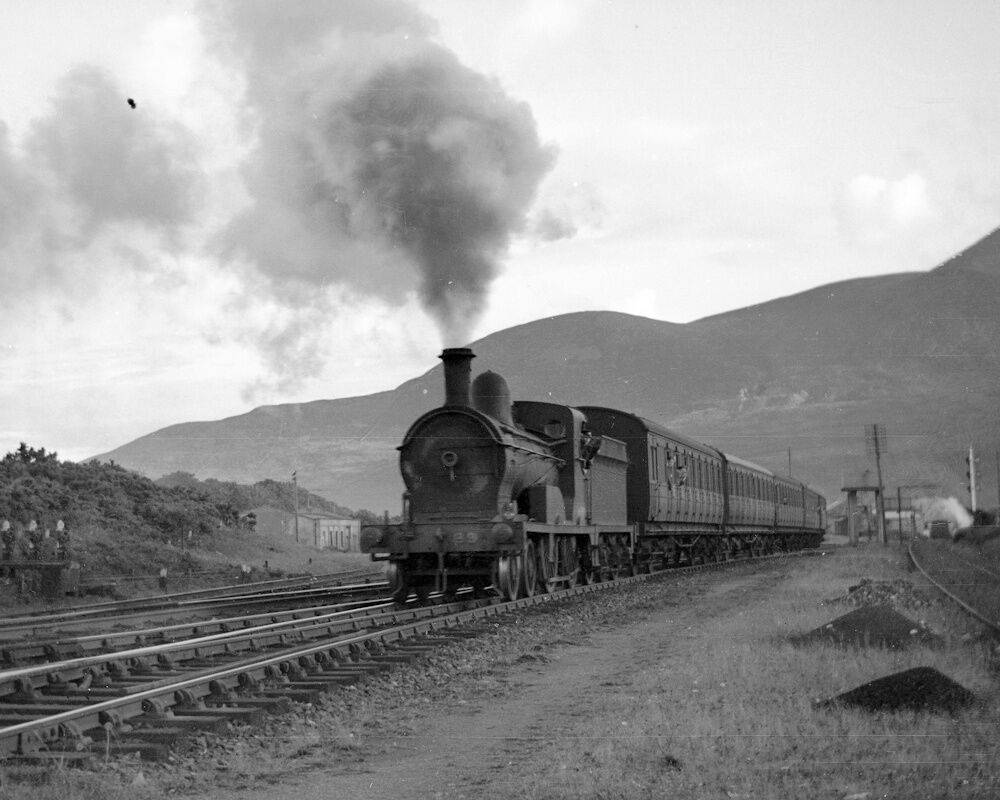
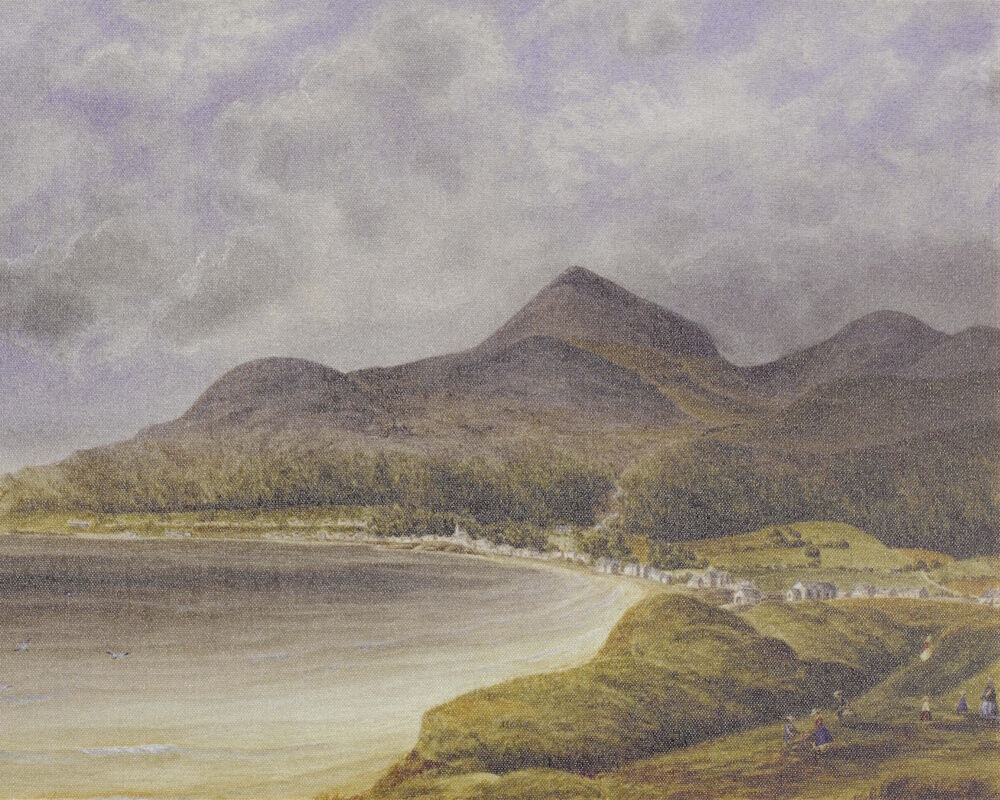
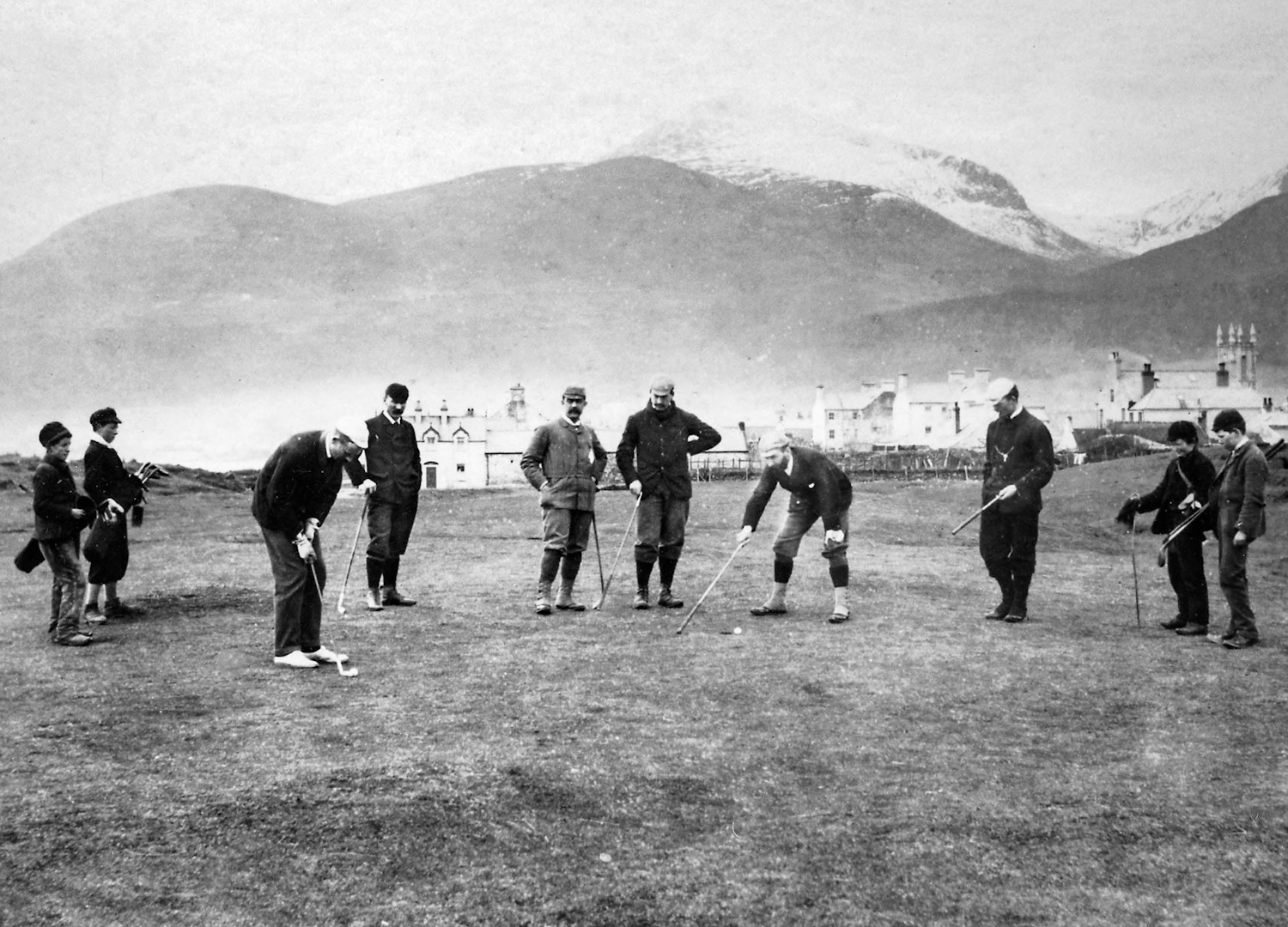
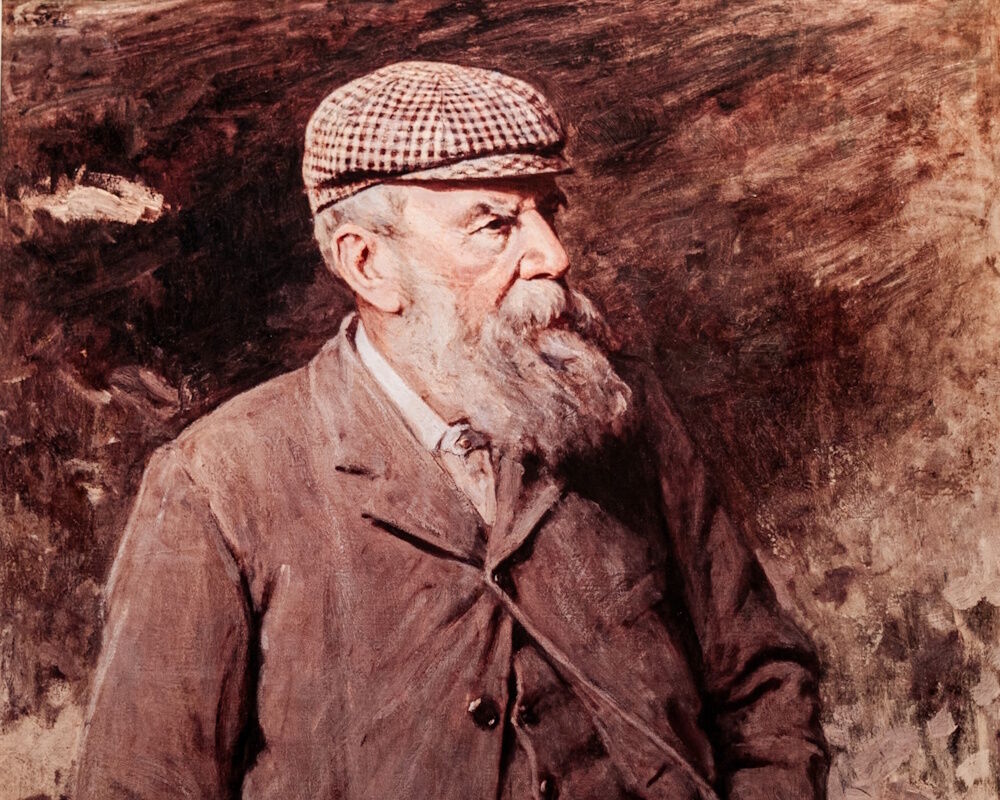
The Belfast to Newcastle railway line opened in 1869 and the quiet fishing village quickly became a popular seaside resort for visitors. By 1889 members of the Royal Belfast Golf Club identified the dune land north of the town as a place where organised golf might be played and the landowner, Hugh Annesley, the 5th Earl Annesley, was approached and agreed to lease a parcel of land closest to the town. He became the first President of The County Down Golf Club, which was established at a meeting on 23rd March 1889 in Lawrence’s dining rooms beside the railway station. An initial 9-hole course was laid out and Tom Morris of St Andrews was invited to visit and advise further for 'an expense not to exceed £4.' Morris arrived in July that year and, on his advice, an 18-hole course was created and ready for play by the middle of 1890.
Read More
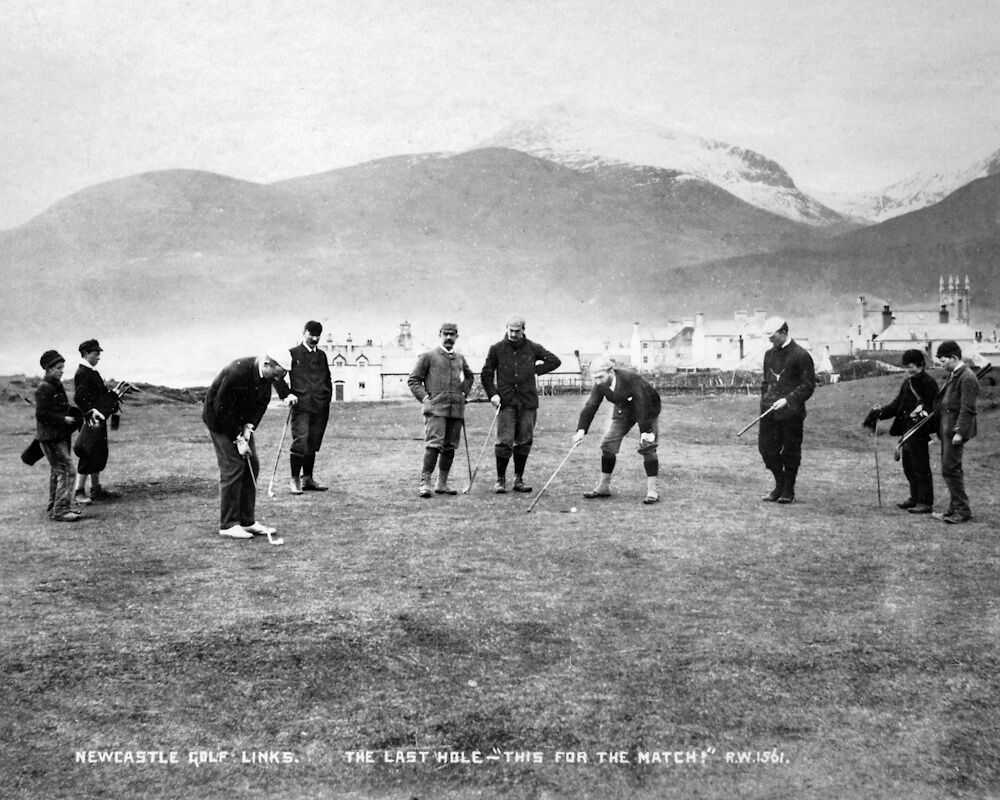
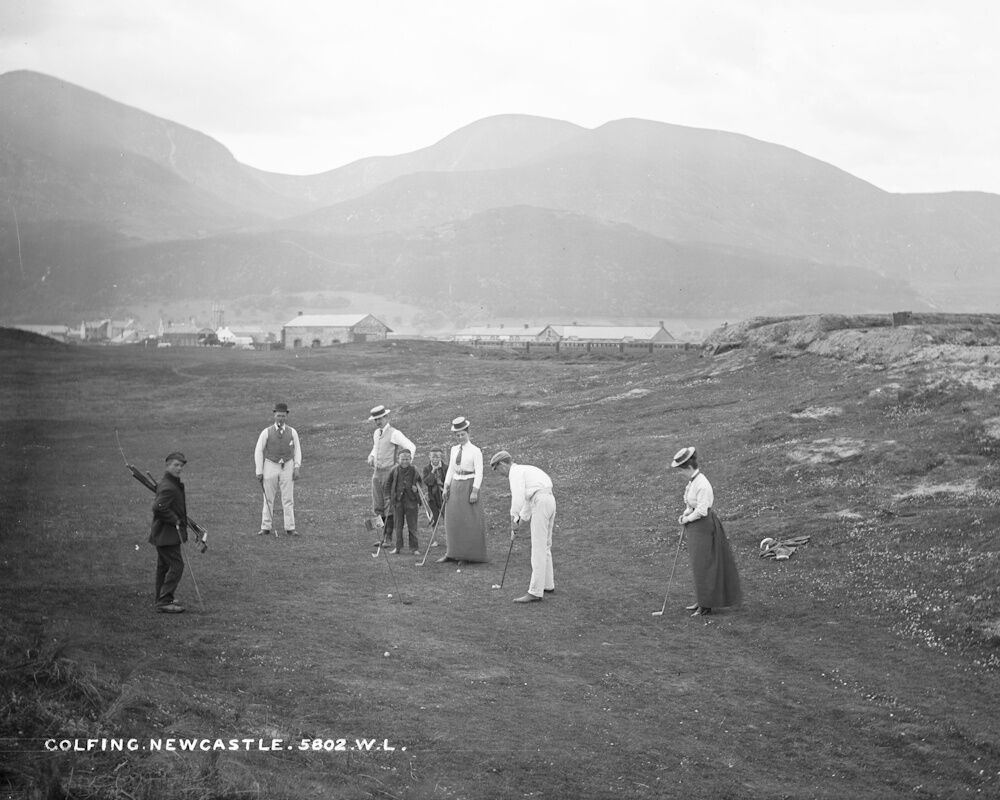
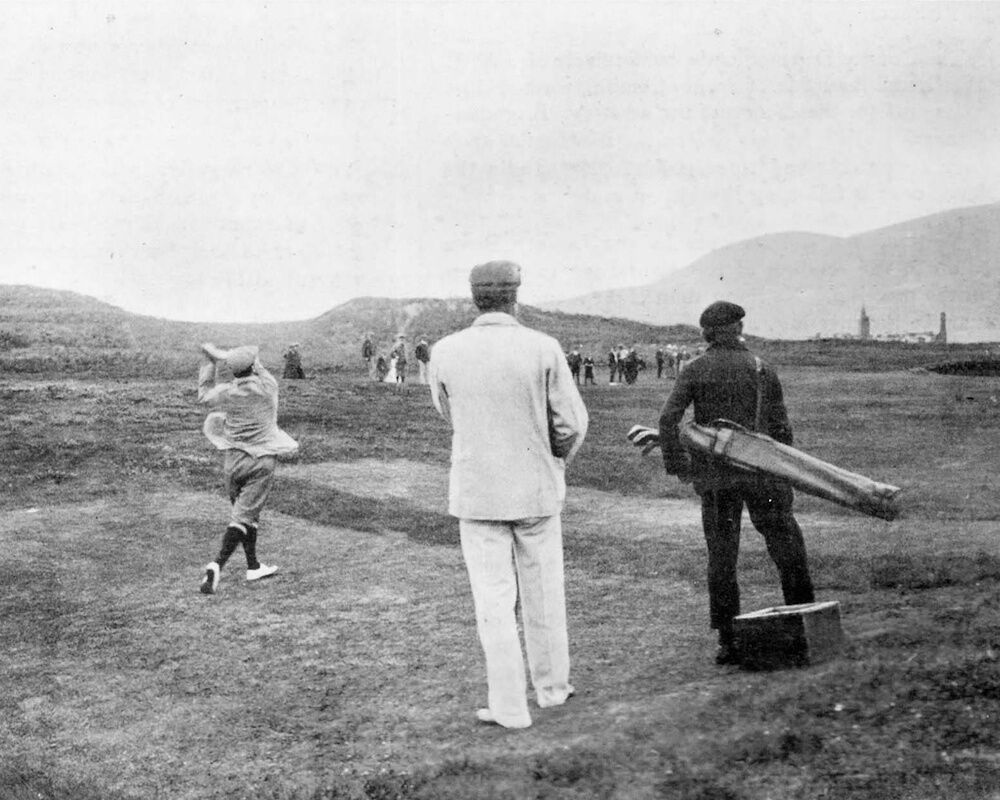
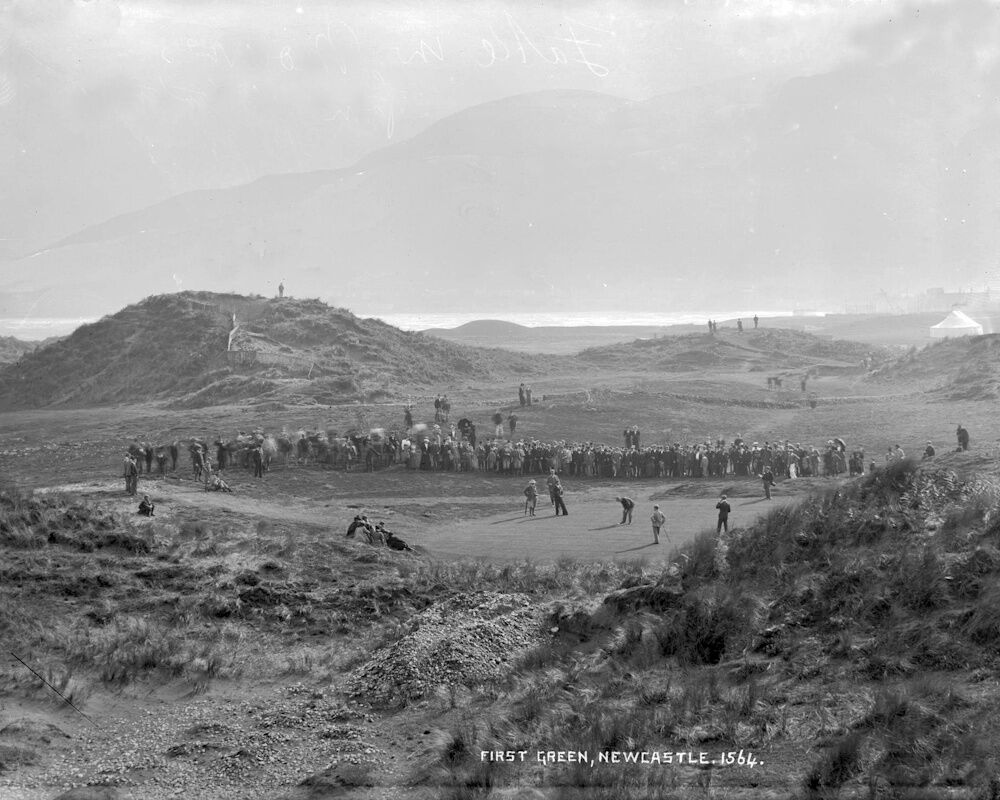
Two of the early holes in the 1890s. The top image is of the green on Home hole adjacent to the railway station where the Slieve Donard Hotel now stands. The railway line can be seen in the background of the second image.
Read More
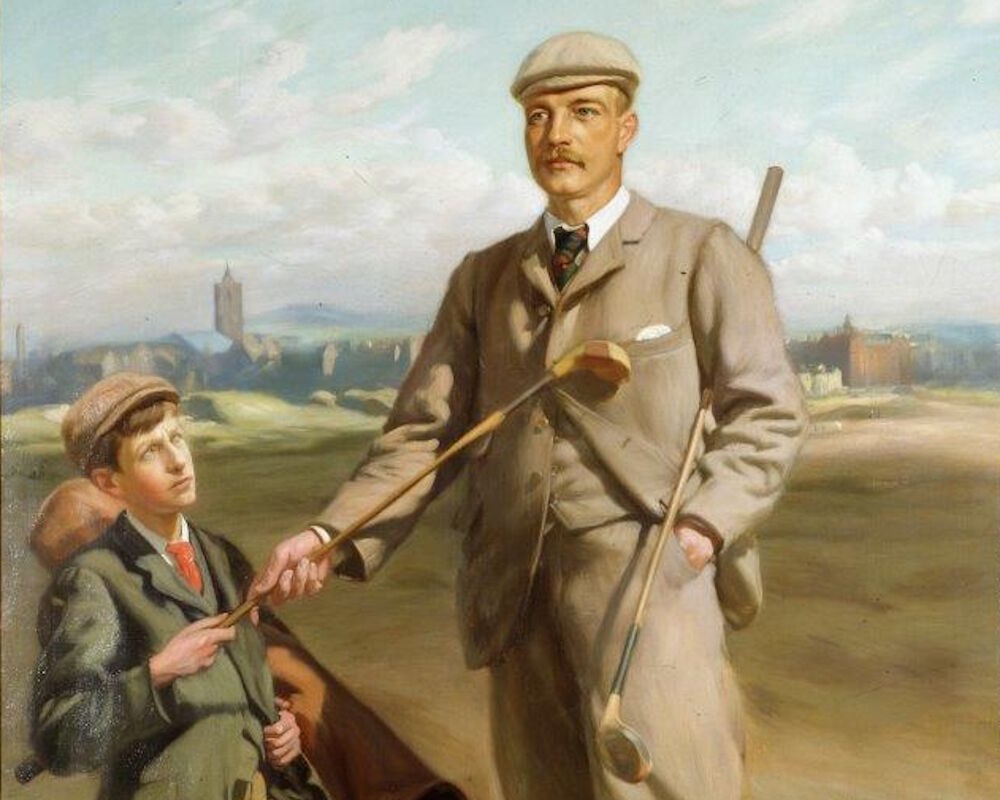
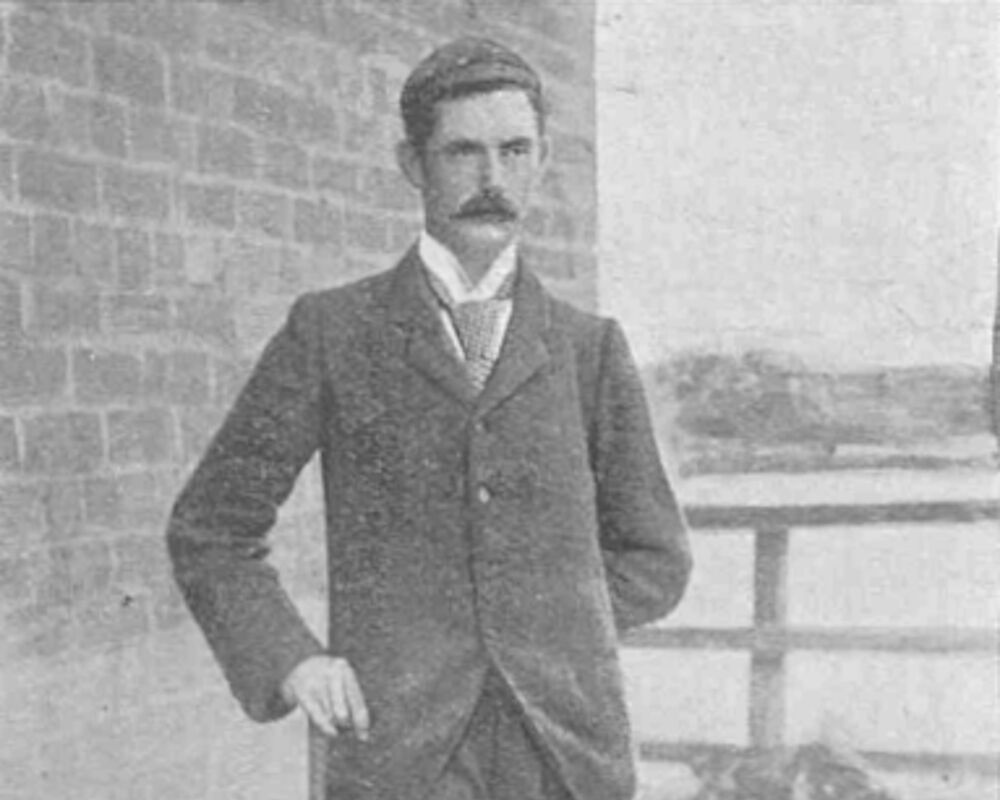
In 1891 the Golfing Union of Ireland, the oldest golf union/federation, was founded by eight Irish clubs with County Down providing its first Honorary Secretary (George Combe) and Honorary Treasurer (Hugh Kelly), both of whom made an immense contribution to Irish golf over the next two decades. The GUI wasted no time in establishing the Irish Open Amateur Championship in 1892, the second oldest national golf championship after The Amateur, and it has been played at Newcastle seventeen times since 1893. The greatest amateurs of the time were John Ball and Harold Hilton, both from the Royal Liverpool club, who between them won seven of the first eleven Irish Open Amateur Championships, Ball winning in 1893 and Hilton in 1900 when County Down hosted those championships. Alongside Bobby Jones, they remain the only amateur golfers to win The Open. The third great amateur of that era, Scotland’s Freddie Tait, played in the 1893 Irish Amateur at Newcastle, losing out to Ball, although he had the distinction of holding the course record in 1892 and again in 1894 whilst still with the Leinster Regiment before transferring to the Black Watch. His father, Peter Guthrie Tait, was Professor of Mathematics at Queen’s College, Belfast for several years in the 1860s and carried out early experiments on the ballistics of the gutta percha golf ball!
Read More
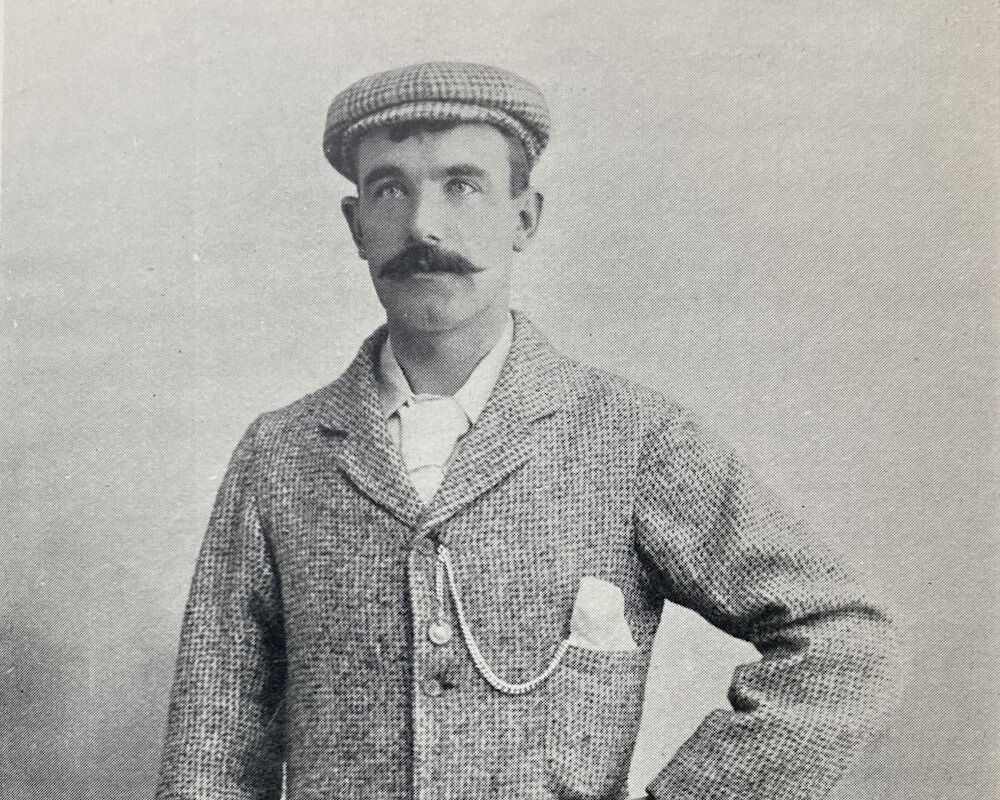
The first professional event at County Down was the 1896 Irish Professional Tournament which ran for several years into the early twentieth century. At that time it had a purse bigger than The Open and attracted the leading cross-channel players. Alex (Sandy) Herd from Scotland defeated Harry Vardon in the quarter-finals before overcoming Ben Sayers of North Berwick by 4 & 3 in the final. The image shows Herd & Sayers on the 1st green (the current 10th green) of the afternoon round. Herd would go on to lift the Claret Jug in 1902, the first winner to use the new rubber-cored Haskell ball.
Read More
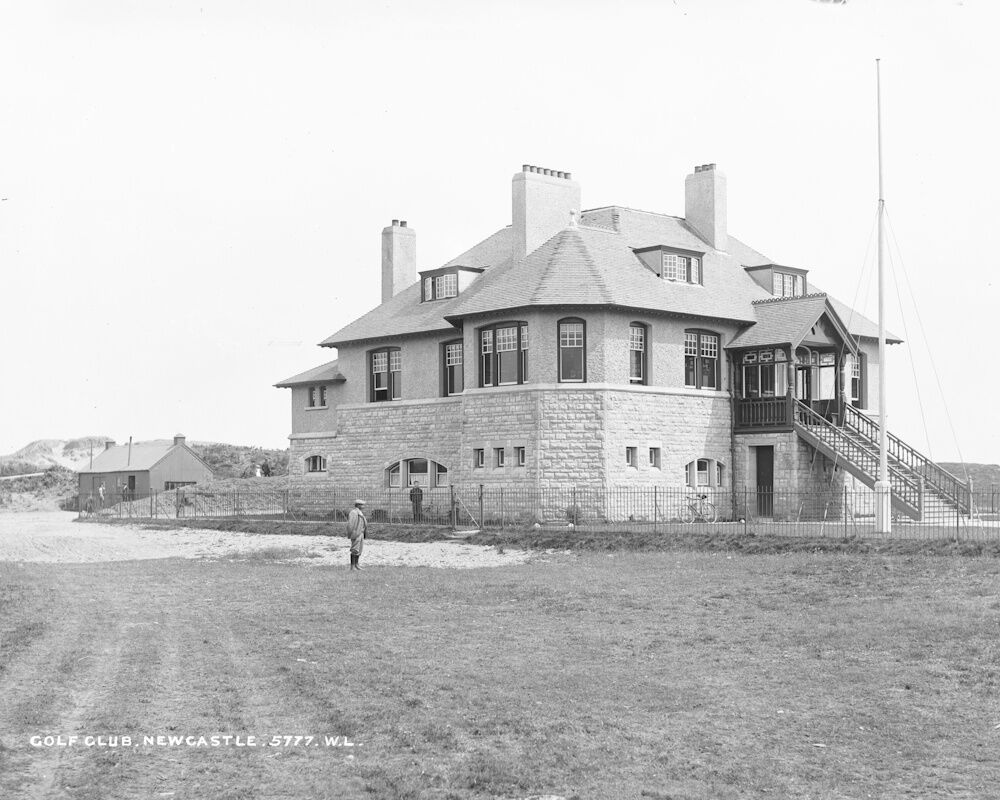
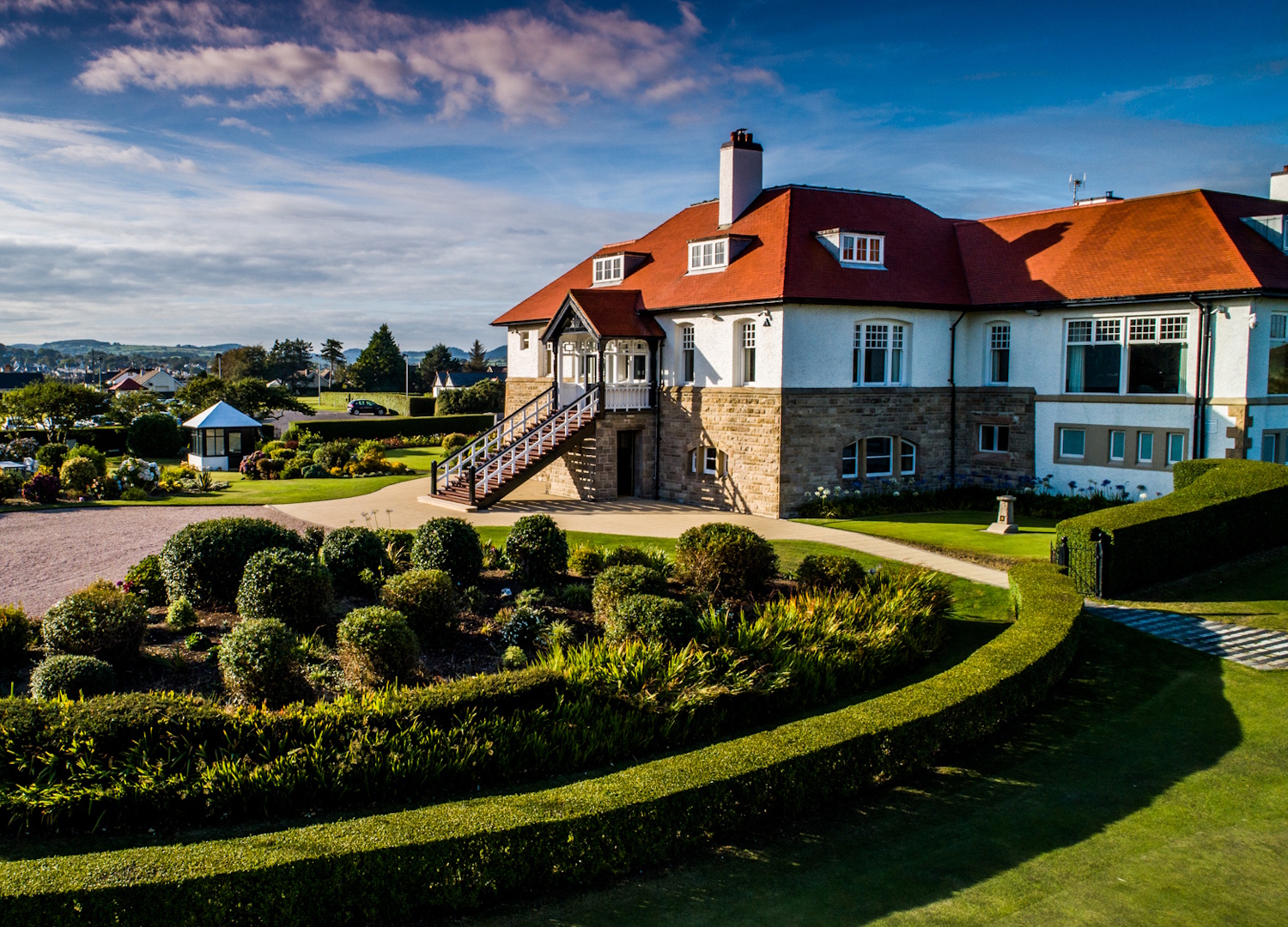
After the club was founded the Belfast & County Down Railway Company maintained a close and mutually beneficial relationship with the club and built a changing facility for golfers at the terminus. By 1894 the ladies had decided to form their own club and run their own affairs and had a modest clubhouse constructed in 1895, eventually rebuilt in 2025. The men quickly followed and in 1895 the 1st and 18th holes were given up for the construction of a clubhouse and the Slieve Donard Hotel. The clubhouse opened in 1897 and was extended in 1989 and again in 2004.
Read More
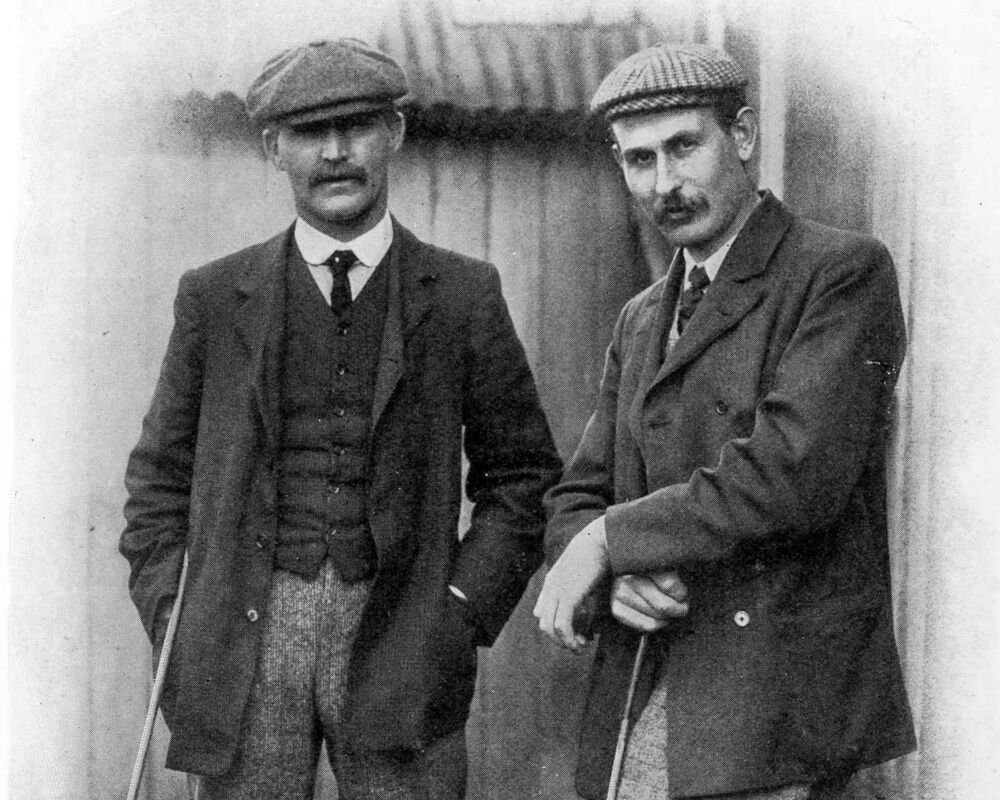
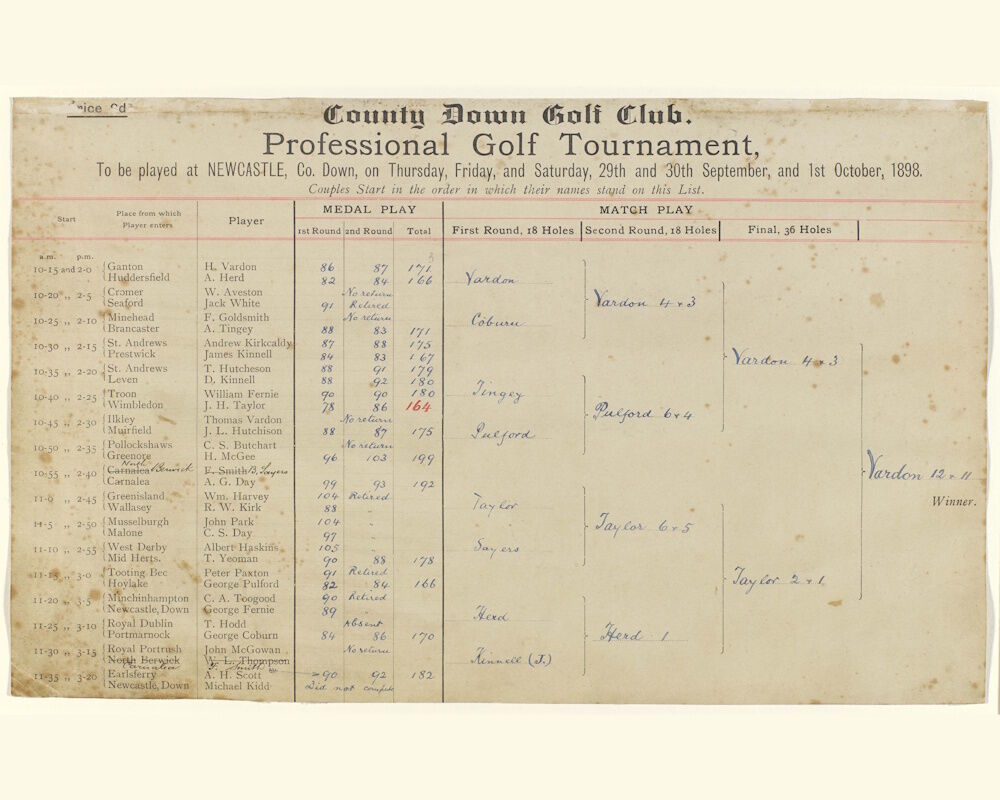
The Irish Professional Tournament returned to Newcastle in 1898. Harry Vardon had just won The Open for the second time a few weeks earlier. His biography subsequently noted that by 1898 he was fast establishing his superiority over his rivals 'who could only stand and watch in admiration' at his progress through the tournament and the demolition of JH Taylor by 12 & 11 in the final. Vardon’s score of 71 strokes in the morning round of the final was recorded in detail by George Combe, the match referee, and declared a new record, beating the previous record of 74 set by Alex Herd two years earlier. Taylor was quoted after the match: 'I played my game but who could stand against that?'
Read More
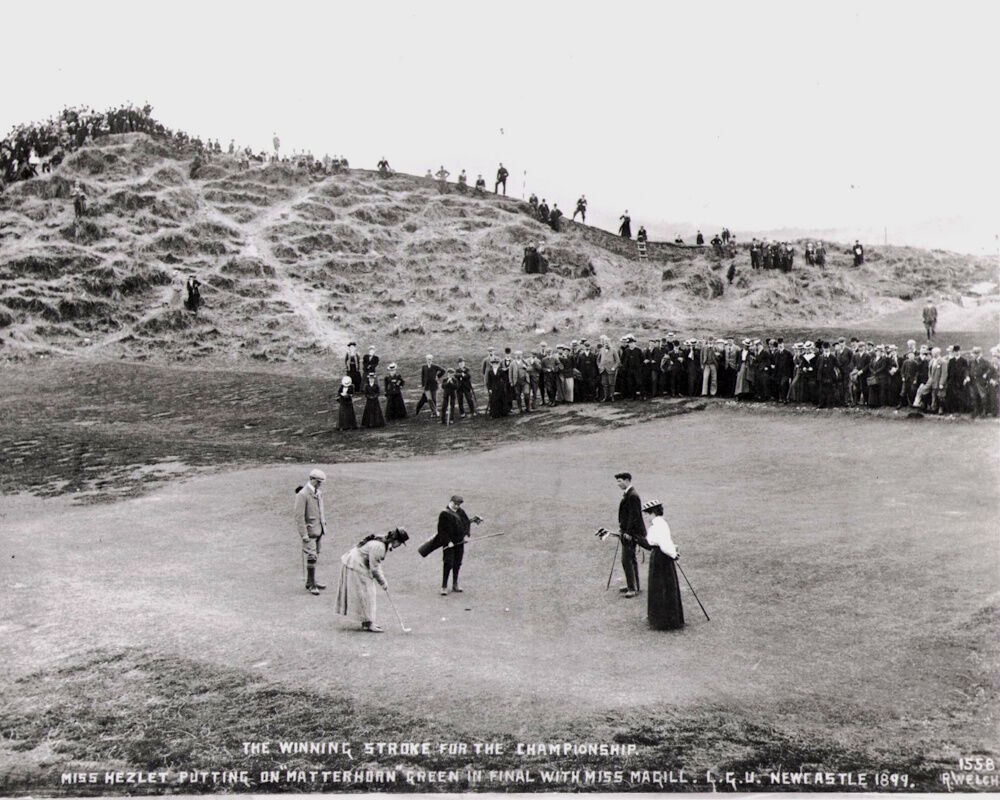
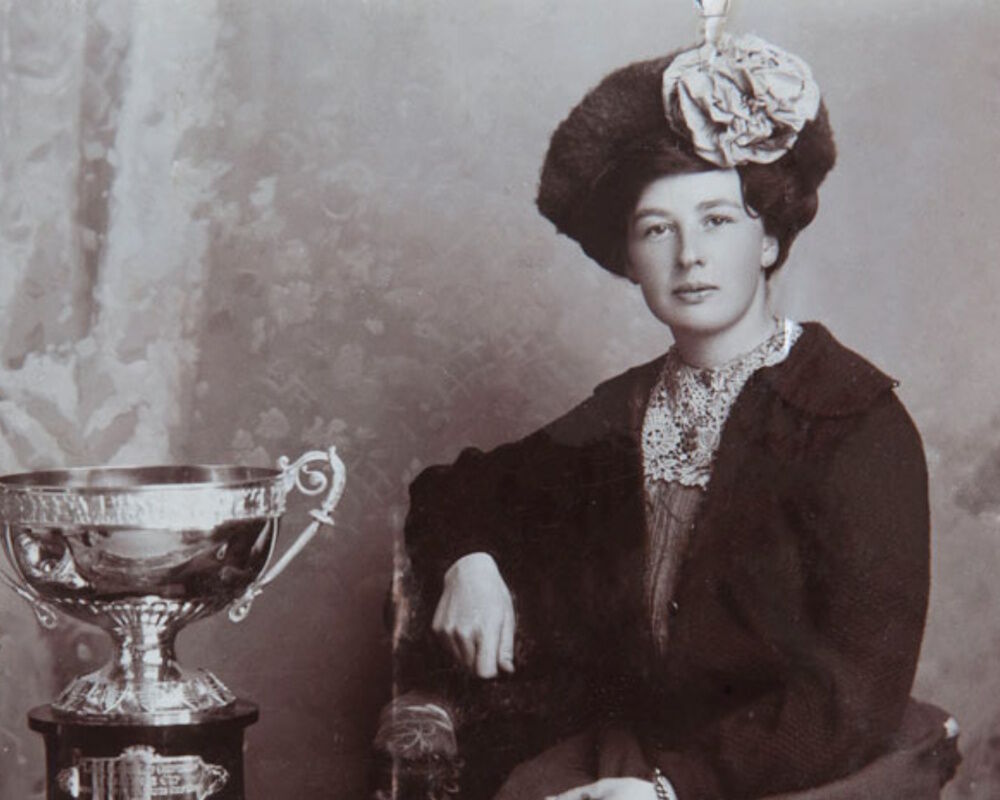
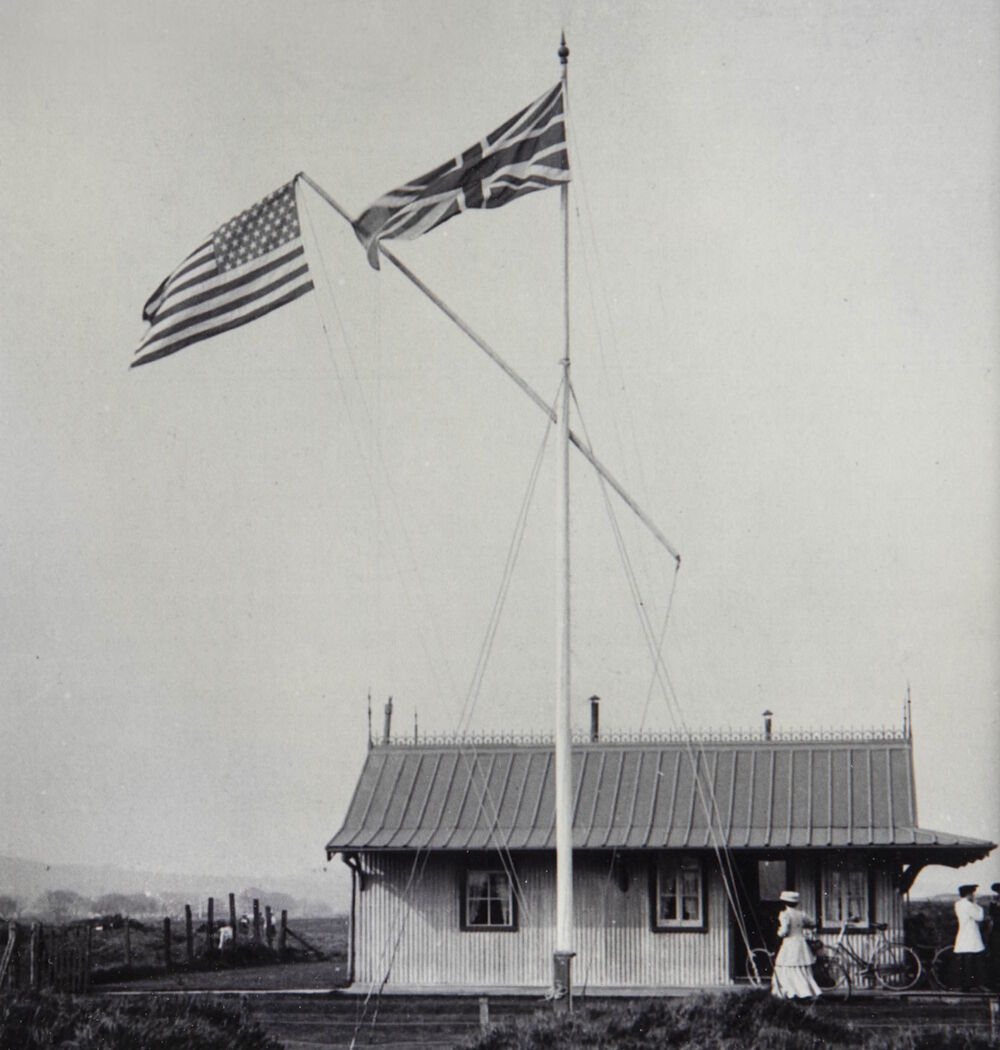
A golden era of Irish dominance in ladies’ golf started in 1899 at County Down. The Ladies’ Golf Union was founded in 1893 and it ran the British Ladies’ Open Amateur Championship thereafter until its merger with The R&A in 2016. The championship has been played at Newcastle a record nine times. In 1899 seventeen-year-old May Hezlet from Royal Portrush defeated Rhona Adair of the Killymoon club in the final of the Irish Ladies’ Championship at County Down. The following week, also at Newcastle, the British Ladies’ Championship was played and little May won the first of her three British Ladies’ titles. She won again at Deal in 1902 and returned to County Down to lift her third title in 1907. Rhona Adair also won the British Championship in 1900 and 1903 and lifted the Irish title in 1902 at Newcastle. Four other Irish players were losing finalists over those years. The Curtis sisters, Harriot and Margaret, played in the 1907 event when Harriot was reigning U.S. Amateur Champion while Margaret would win the U.S. title on her return to America in 1907 and on two further occasions. In 1932 they presented the Curtis Cup for the biennial match.
Read More
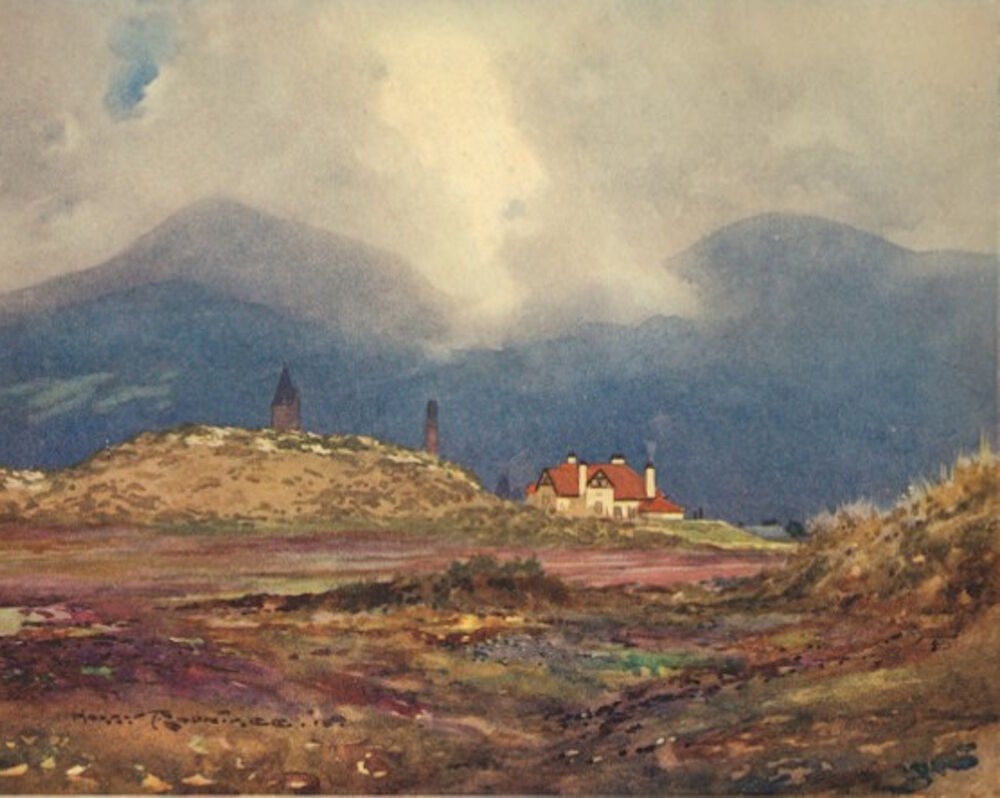
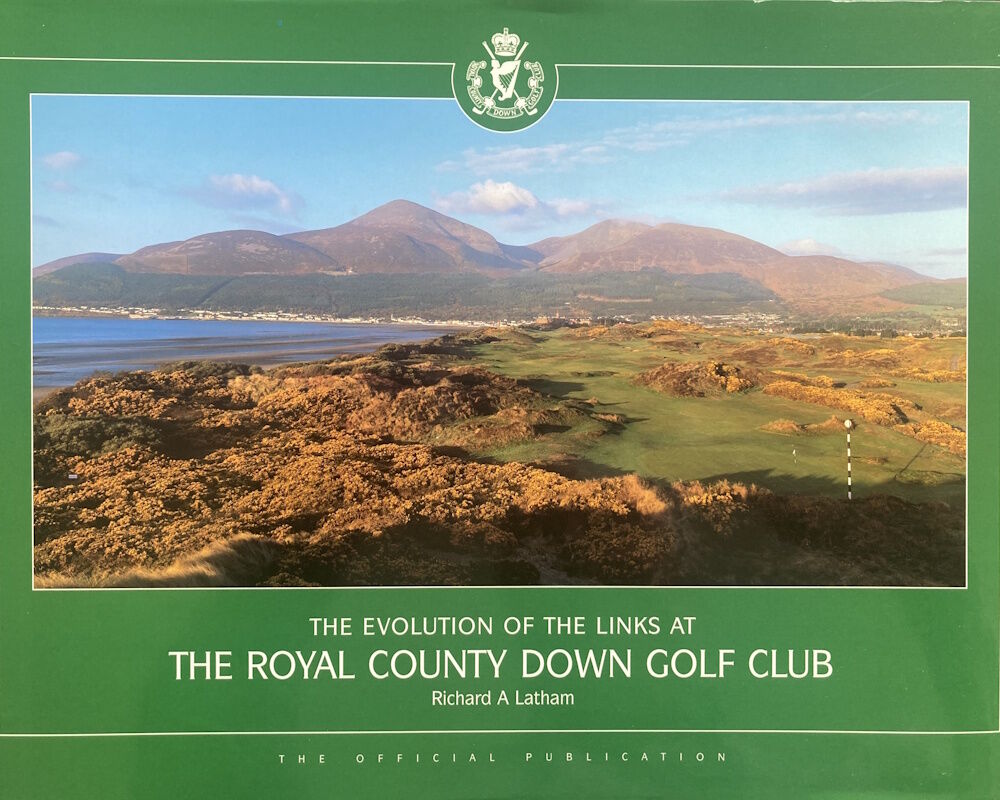
In 1900 responsibility for the course was handed to the aforementioned George Combe whose vision was to put the Newcastle links at the forefront of golf. With the benevolence of the Annesley estate and the acquisition of more duneland Combe set about his task and created two loops of nine holes over the next two years. Never satisfied, he sought help from Sandy Herd, James Braid, Ben Sayers as well as Vardon and Taylor all of whom visited, played and advised. By 1912 the second loop of nine holes was much as it is today. The course was included in Bernard Darwin’s 1910 classic work Golf Courses of the British Isles and its development up to that time is documented in great detail in Richard Latham’s 2006 epic book The Evolution of the Links at Royal County Down Golf Club.
Read More
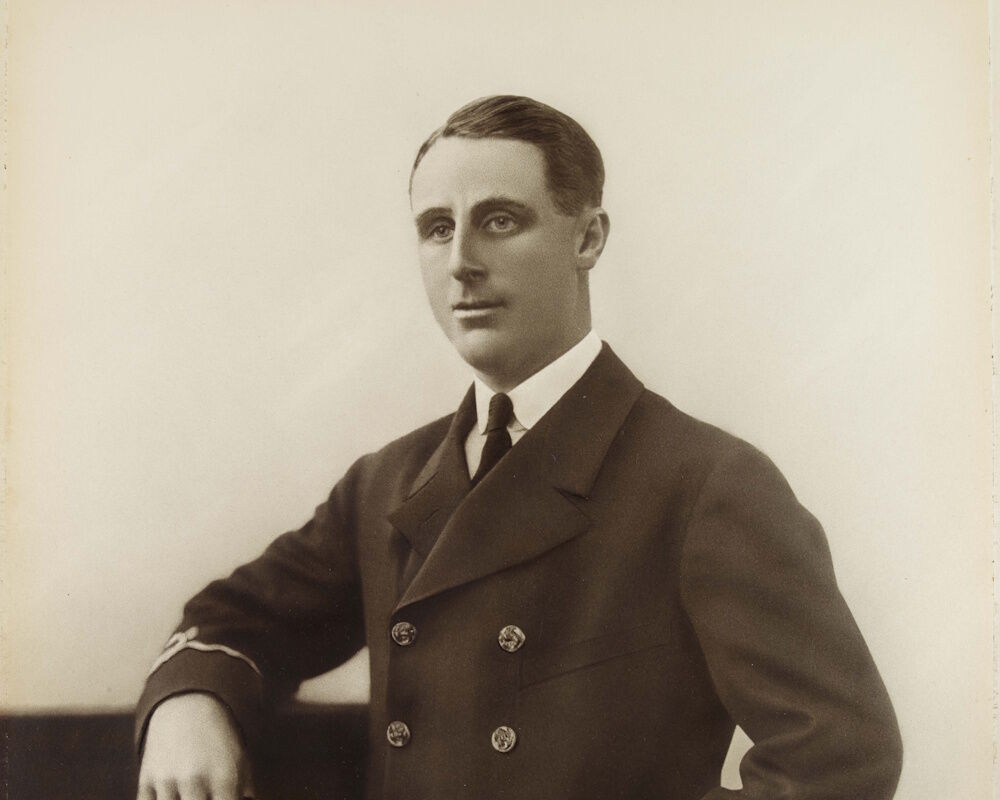
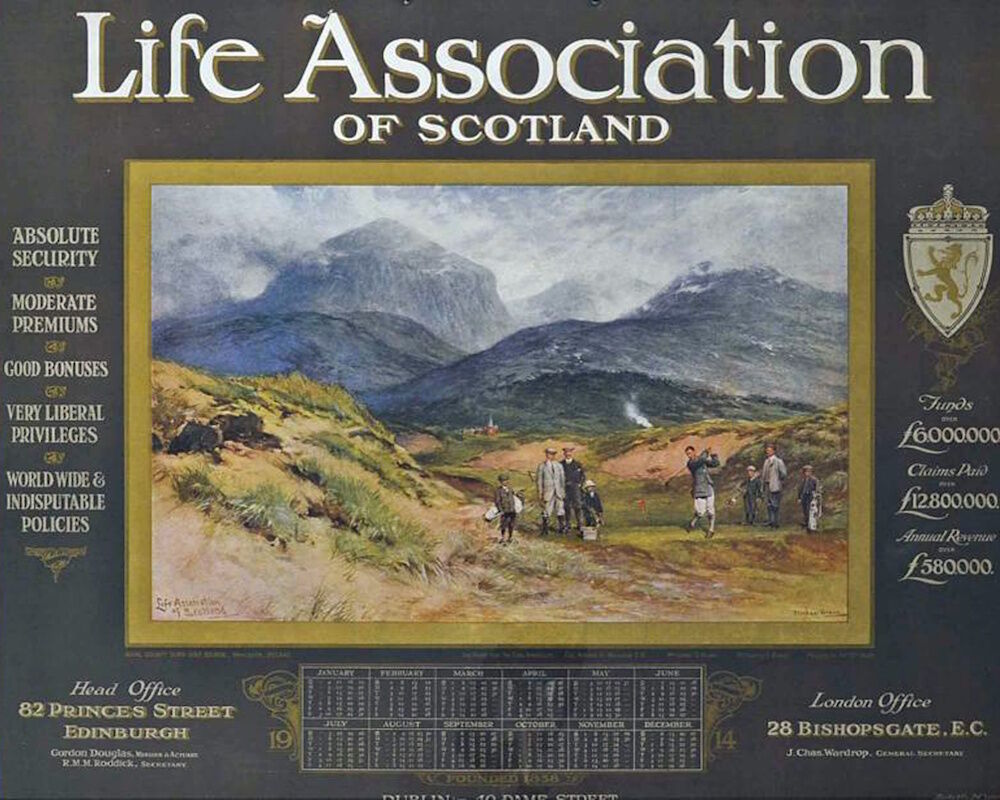
In April 1908 King Edward VII conferred royal patronage on the club. In December that year the President of the Club, Hugh, 5th Earl Annesley, who had been a generous benefactor of the Club, died. His son, Francis, succeeded his father and was immediately elected President of Royal County Down. He was an excellent golfer who had won the South of Ireland Golf Championship in 1906 and after he became President he contributed enormously to the life of the Club. In 1913 the Life Association of Scotland commissioned the Scottish artist Michael Brown to paint a golf scene at Royal County Down to use in their annual calendar. Brown’s original painting included Francis with three other golfers and hangs in the members’ area of the clubhouse. One of those golfers was Lionel Munn, the leading Irish amateur of that era and coincidentally Francis lost to him in the final of the Irish Amateur Championship in August 1914. Tragically, in November that year, Francis lost his life when his airplane was shot down by German gunners over the Belgian coast. Thereafter the club never elected another President.
Read More
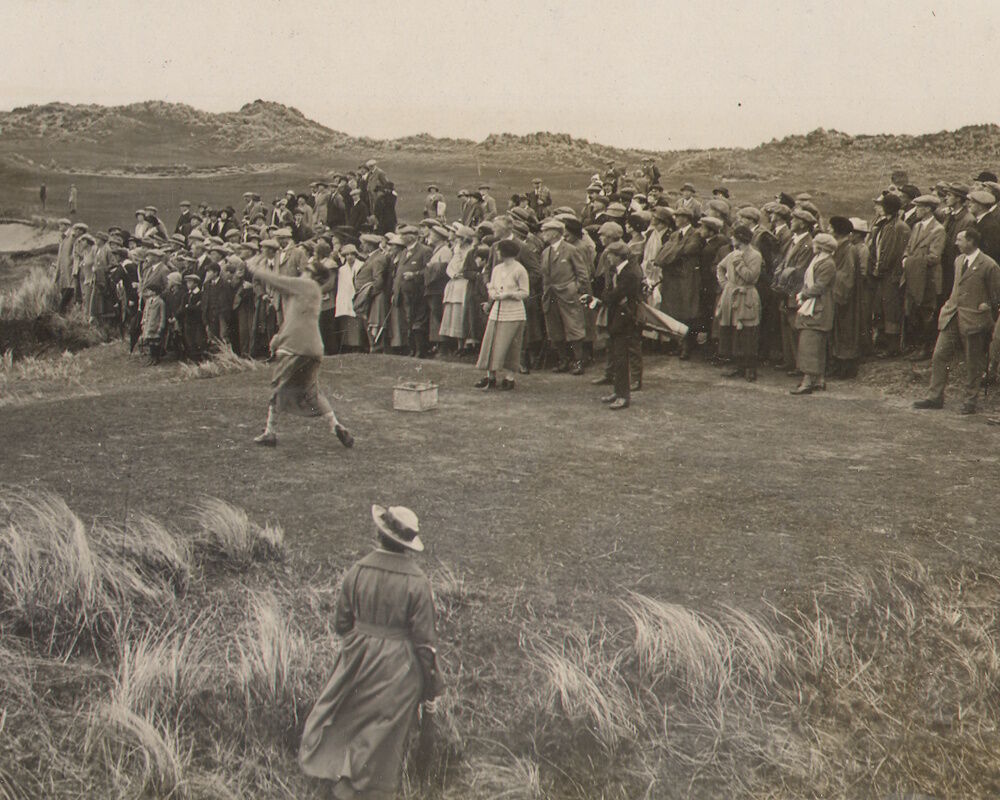
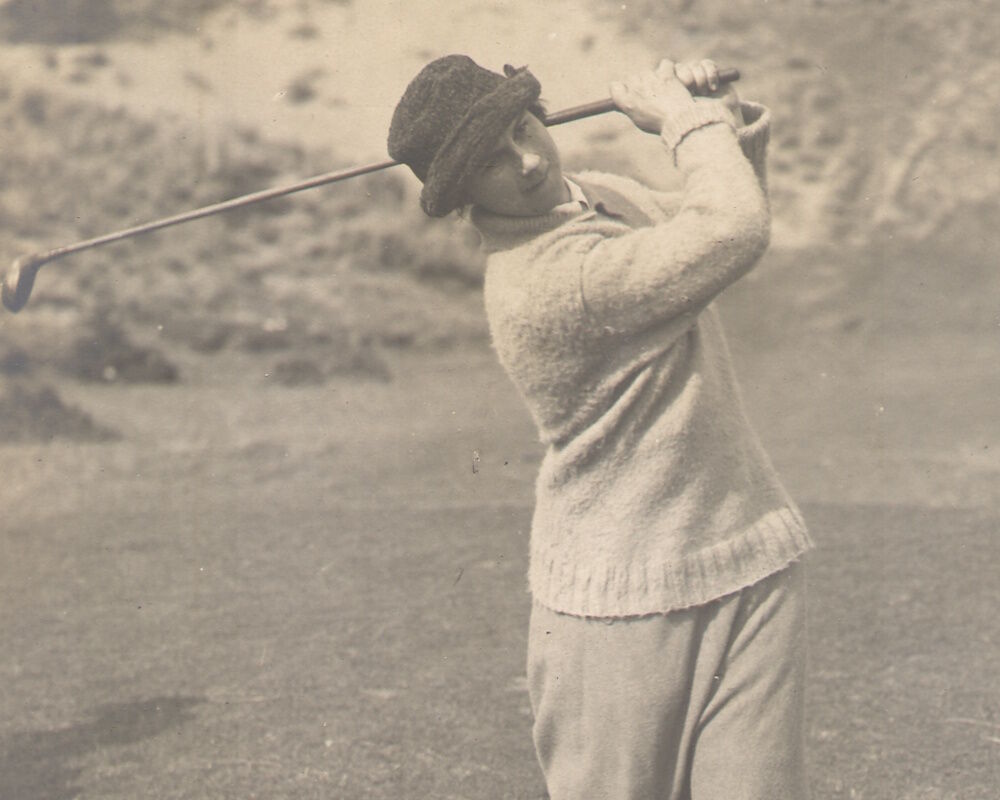
Despite civil unrest in Ireland the first British Ladies’ Championship after the Great War was played at Royal County Down in 1920. The 1914 Champion, and holder of the title, was Cecil Leitch from Carlisle & Silloth. She powered her way to victory in 1920 and went on to win two more titles, a record four victories, shared with her great rival, Joyce Wethered. A little known American, Marion Hollins, who had reached the final of the U.S. Amateur in 1913 played in this championship and did well to reach the quarter-finals given the cold, windy conditions which prevailed that week. She went on to win the U.S. Amateur in 1921 and subsequently became responsible for developing golf on the Monterey Peninsula, including Cypress Point where she hired and worked with Dr Alister MacKenzie. She was ultimately the reason Bobby Jones hired MacKenzie to design Augusta National. She was the first Captain of the United States Curtis Cup team in 1932 and, for her enormous contribution to women’s and children’s sport in America, she was posthumously inducted into the World Golf Hall of Fame in 2021 alongside Tiger Woods.
Read More
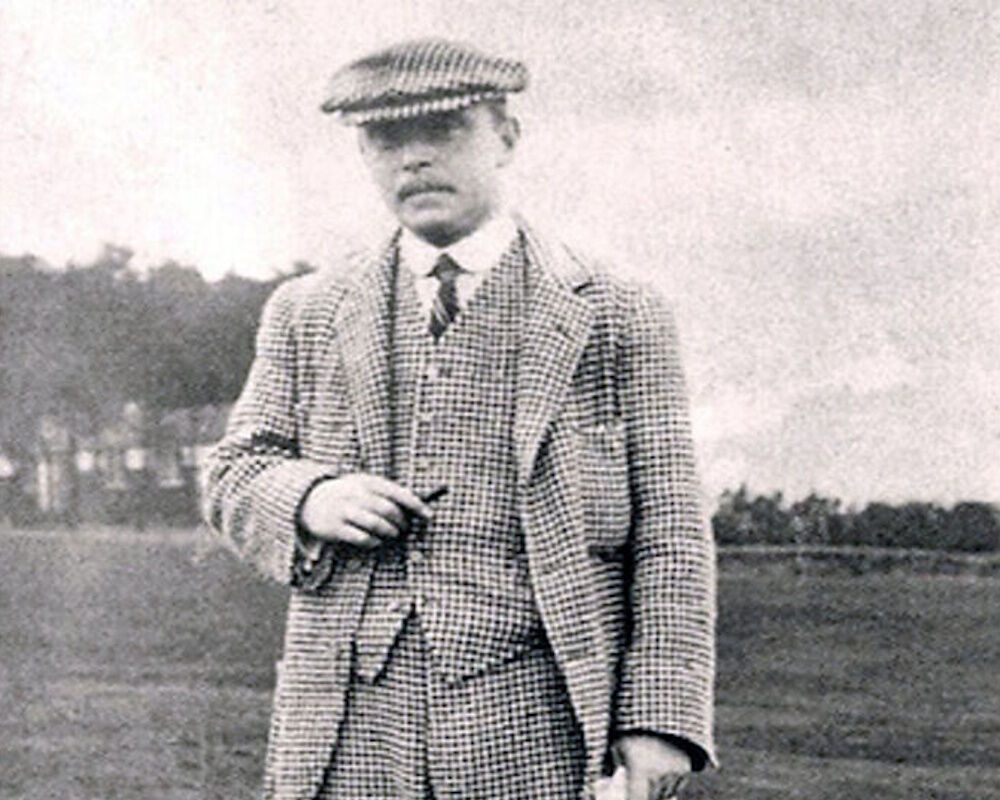
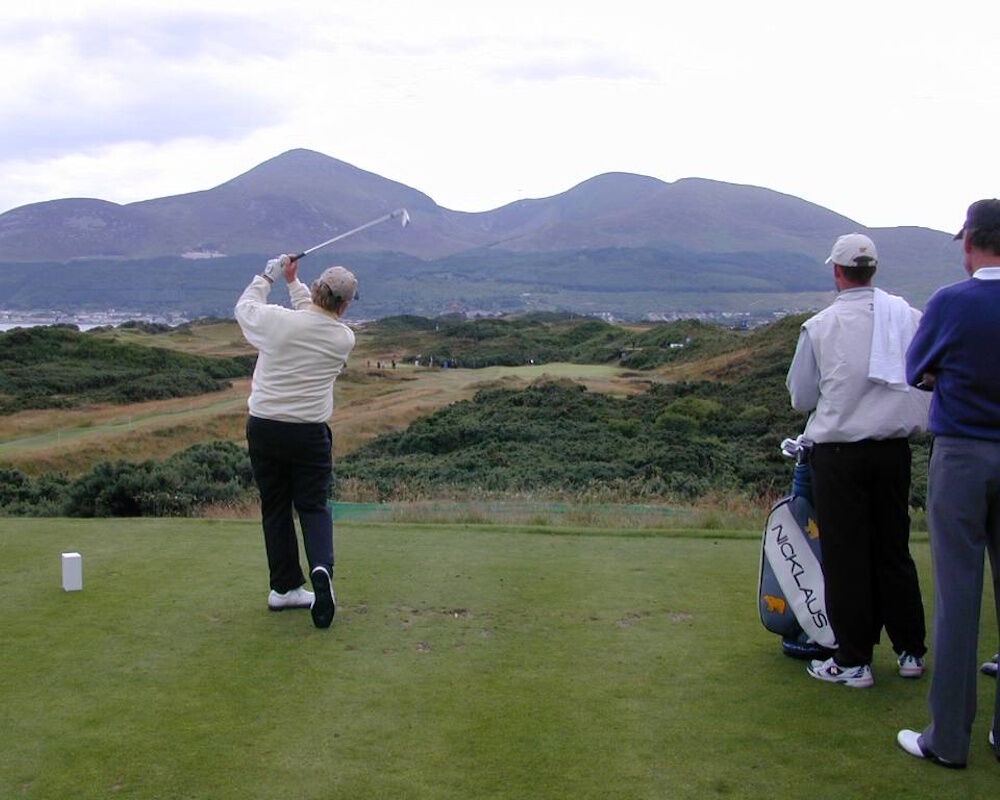
Although the club would have liked to have made further changes to the course, its financial situation after the war was such that an invitation to Harry Colt, the foremost course architect of the time, was deferred until 1926. Colt’s redesign of the front 9 holes resulted in entirely new 4th and 9th holes and re-routing of several other holes. Since then, apart from new tees to add length, the only significant change to the course has been the re-routing of the 16th hole in 2004.
Read More
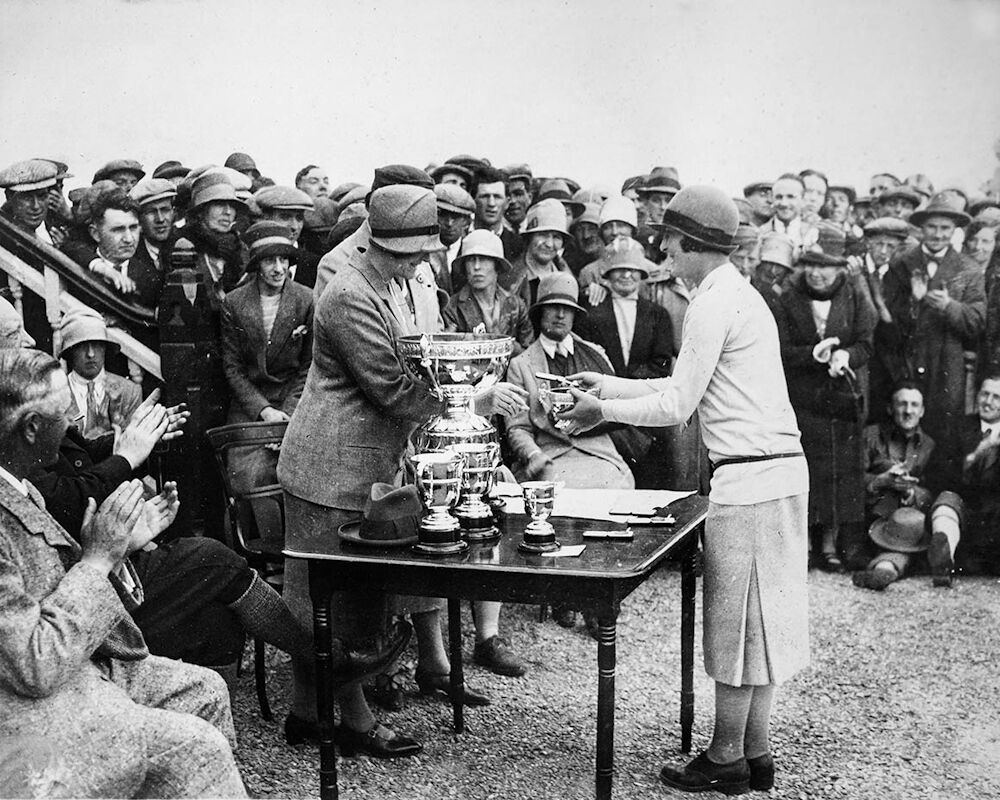
1927 saw the first winner of the British Ladies’ Championship from outside the British Isles. Simone Thion de la Chaume from the St. Cloud club in Paris was the first of three French women to win the championship at Royal County Down. She defeated England’s Dorothy Pearson in the final, a repeat of the final of the British Girls Championship three years earlier. In 1930 she married the French tennis player, and multiple grand slam winner, René Lacoste who created the Lacoste clothing company. Their daughter, Catherine, remains the only amateur to have won the U.S. Women's Open Championship.
Read More
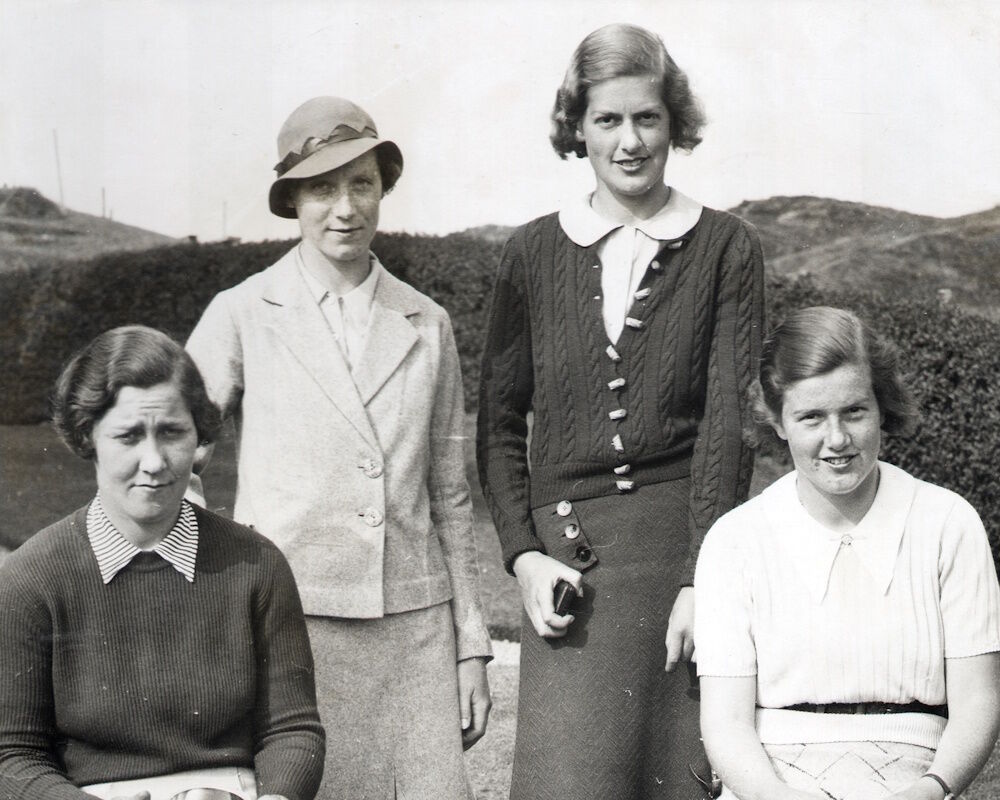
An all English final in the 1935 British Ladies Championship resulted in a win for the Kent woman, Wanda Morgan, who defeated the equally long-hitting Pam Barton from Royal Mid-Surrey. Miss Barton would go on to win the championship the following year before crossing the Atlantic to take the U.S. Women's Amateur to become the first player ever to hold both titles simultaneously. During World War II she joined the Women’s Auxiliary Air Force and was killed in an air crash in 1943. The Pam Barton Salver is awarded to the winner of the British Ladies’ Amateur.
Read More
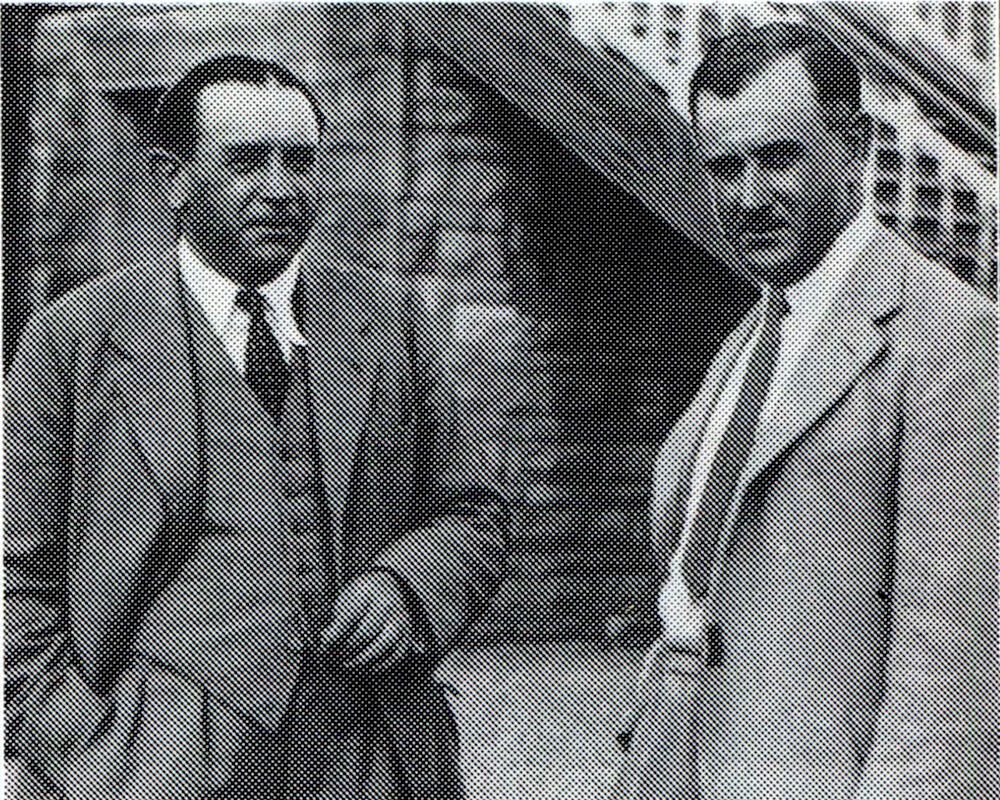
Three Irish Opens were played at Royal County Down between the wars. The first two of these were won in 1928 and 1935 by Ernest Whitcombe, the eldest of three successful golfing brothers from Somerset. Between them they earned ten Ryder Cup caps. Ernest was runner-up by one stroke to Walter Hagen in The Open in 1924 while his brother, Reginald, won The Open in 1938.
Read More
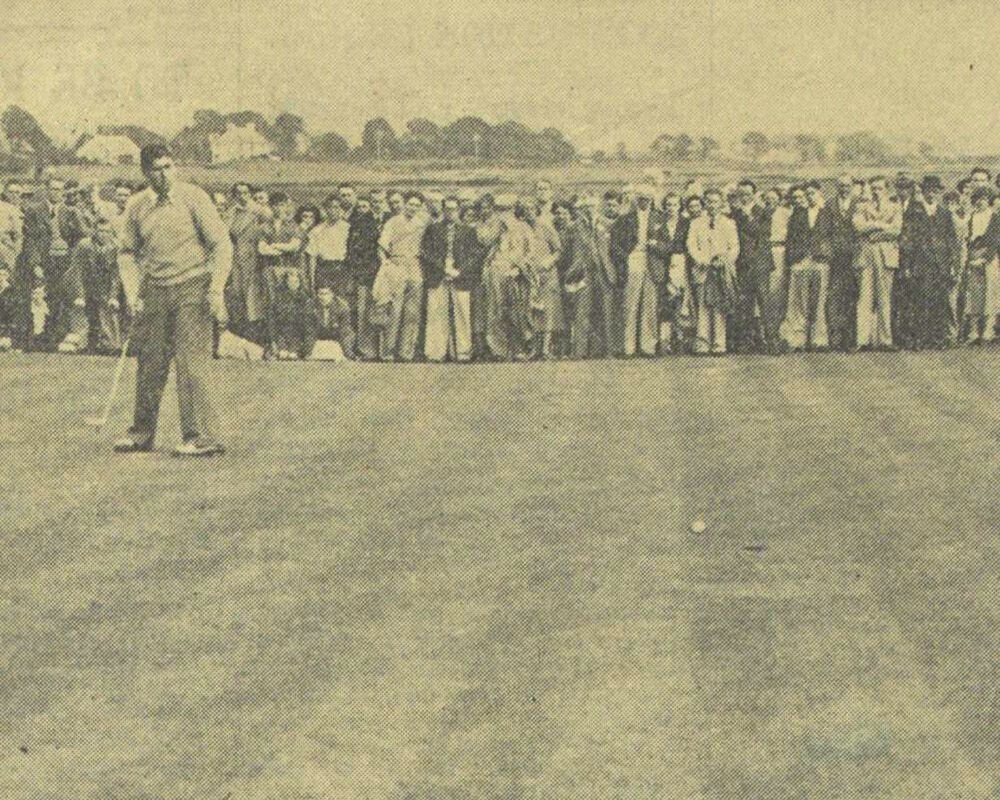
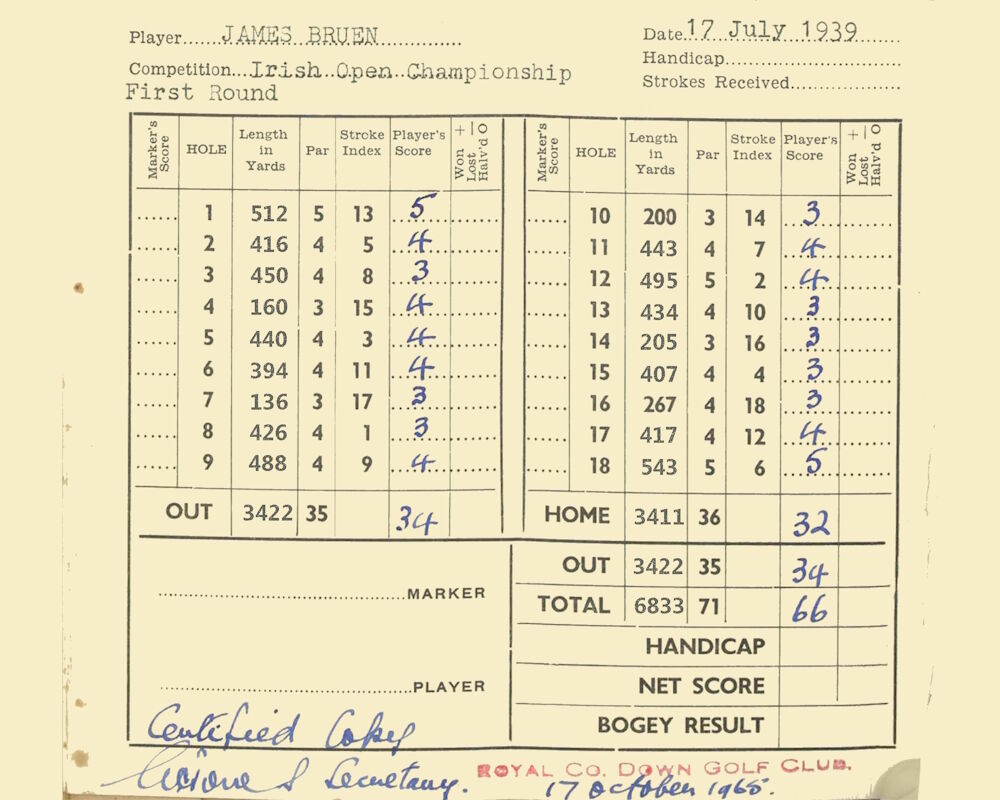
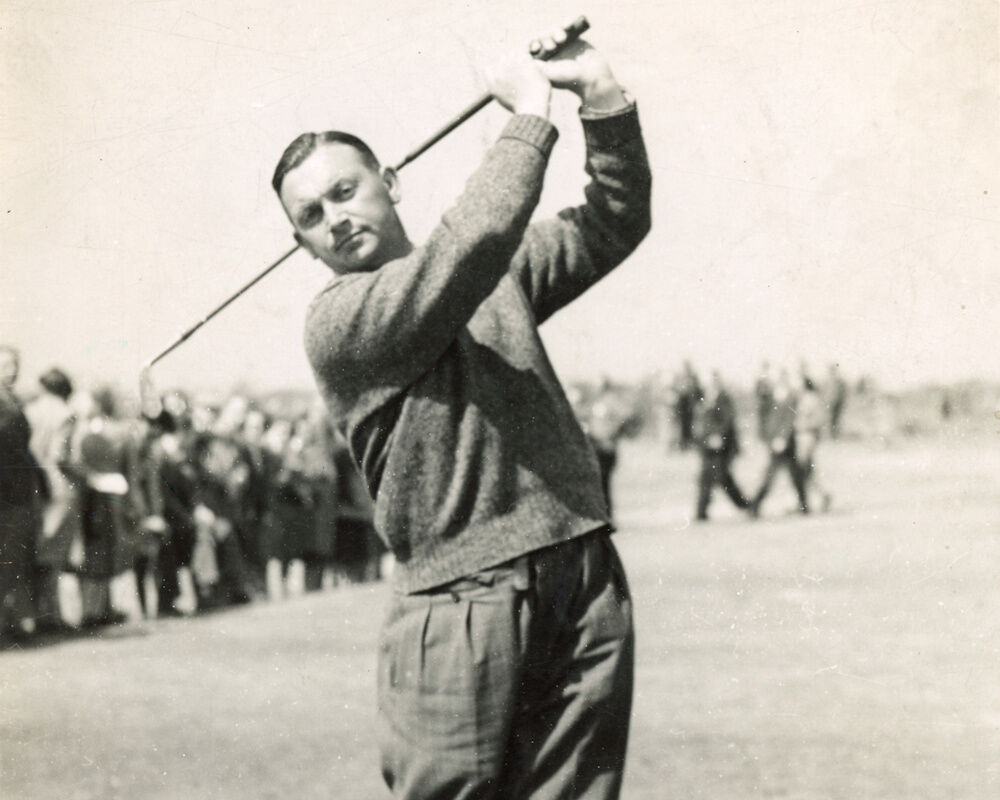
English dominance of the Irish Open continued at Royal County Down in 1939 when Yorkshireman Arthur Lees won against a high quality field including Bobby Locke from South Africa, Max Faulkner and Fred Daly. Lees went on to play in four Ryder Cups and was the club Professional at Sunningdale for almost thirty years while still competing successfully. Ireland’s 19-year-old Walker Cup player, Belfast-born Jimmy Bruen, opened with a course record score of 66 and remained in contention until a final round 81 saw him slip to sixth place, nine strokes behind the winner. He went on to win The Amateur Championship in 1946 at Royal Birkdale and played in two more Walker Cups before a wrist injury ended his competitive career.
Read More
In 1945 the Annesley family and the Club decided to support the idea of a local golf club for local golfers with playing facilities at Royal County Down. By 1946 the Mourne Golf Club was established and became affiliated to the Golfing Union of Ireland. It continues to thrive sharing a happy campus alongside the Royal County Down and the Royal County Down Ladies Clubs.
Read More
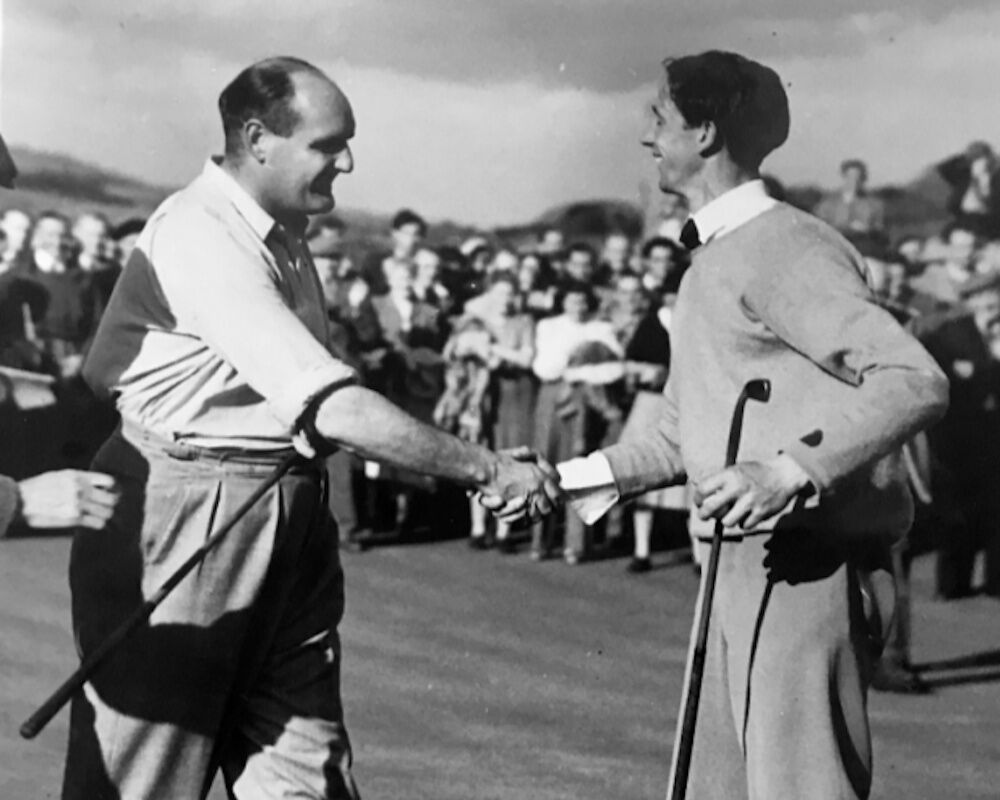
In the middle of the twentieth century three Irish golfers reached the top of the amateur game in Great Britain & Ireland. All three won national championships at Royal County Down. Jimmy Bruen’s course record in the 1939 Irish Open was preceded by winning the Irish Open Amateur in 1938 when he was never taken beyond the 15th hole over six rounds of matchplay. Cecil Ewing from the Co. Sligo Club played in six Walker Cups while Joe Carr from Sutton Golf Club in Dublin earned a record eleven caps in addition to winning The Amateur Championship three times. Carr also played in the Masters on three occasions making the cut twice. Ewing and Carr contested the final of the Irish Open Amateur Championship when it returned to Royal County Down in 1948 with Ewing winning on the 36th hole. Carr had the consolation, if he needed any, of winning the Irish Close Championship at Newcastle in 1964. In 1991 he was elected Captain of The Royal & Ancient Golf Club of St Andrews and was inducted into the World Golf Hall of Fame in 2007.
Read More
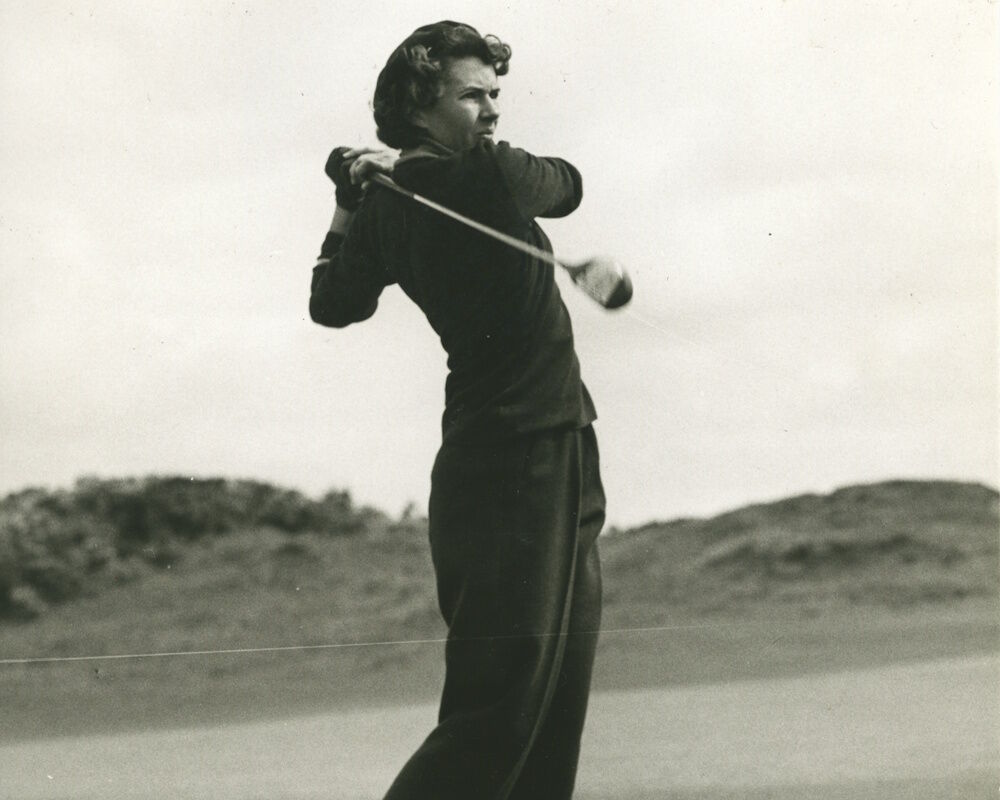
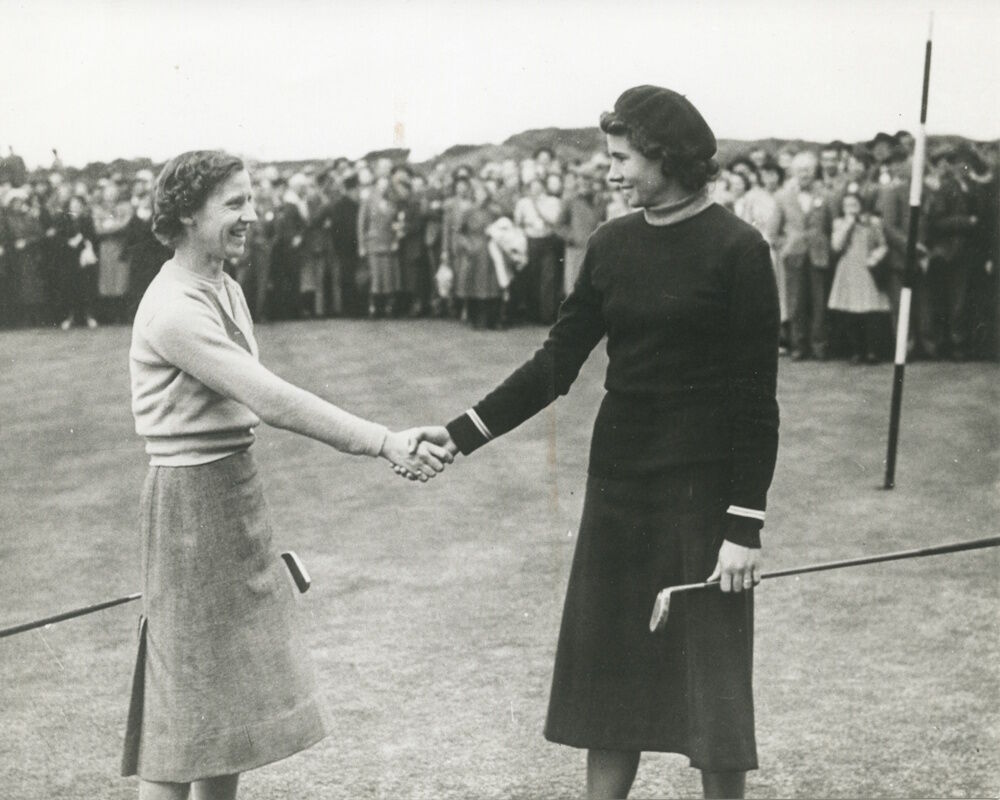
Lally Vagliano from the Morfontaine Golf Club in Paris won the British Girls’ Championship in 1937 and thereafter was a prolific winner of amateur golf championships across Europe. In 1950, as the Vicomtesse de Saint-Sauveur, she won the British Ladies’ Amateur at Royal County Down defeating Jessie Valentine from Scotland in a high-quality final. Vagliano’s father presented the trophy of that name for play in the biennial match between GB & I and the Continent of Europe. In 1937 Jessie Anderson, as she was then, won The British Ladies’ and she took the title again in 1955 and 1958. She played in six Curtis Cups.
Read More
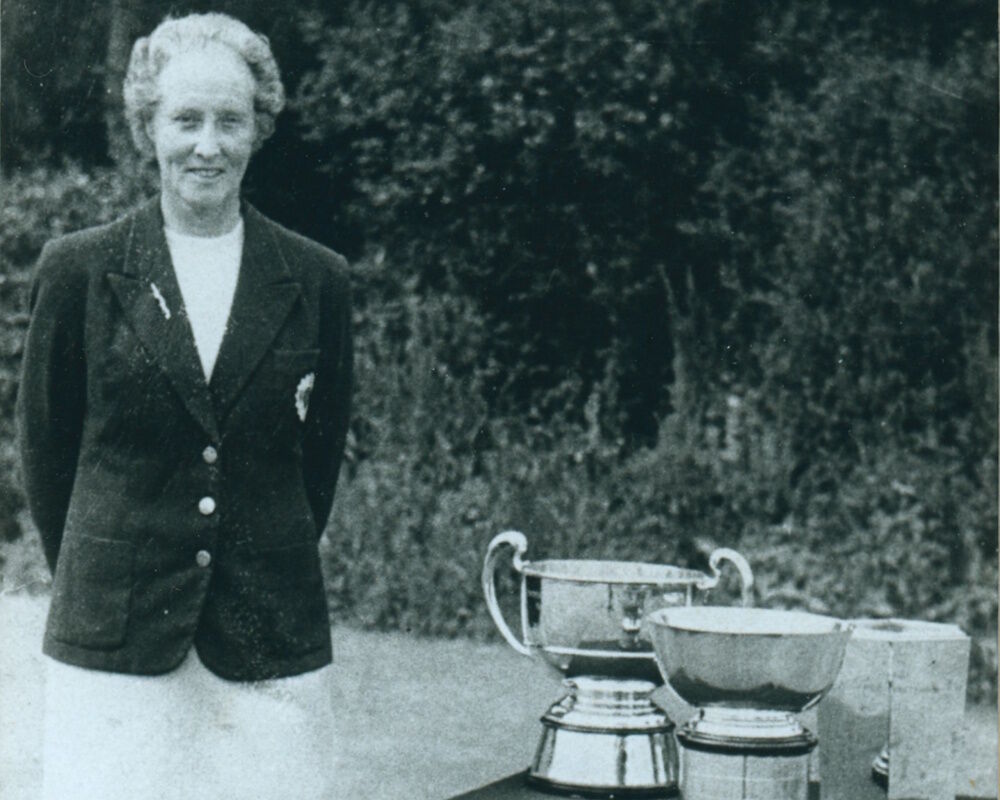
Daisy Ferguson of the Royal County Down Ladies’ Club was an Irish international player who won the 1935 Irish Ladies’ Championship. She was subsequently invited to Captain the Great Britain & Ireland side at the 1958 Curtis Cup at Brae Burn CC, Massachusetts. GB & I achieved a halved match (the first time this had been achieved on American soil) and the following year she captained the Vagliano Trophy Team to victory against the Continent of Europe at Wentworth. She was elected President of The Ladies’ Golf Union from 1964 to 1966. Her clubmate, Moira Smyth, an equally successful international player, also served as President of The LGU from 1976 to 1978 and during her tenure presented the Smyth Salver for the leading amateur in the British Women’s Open. Prior to The LGU merger with The R&A the Royal County Down Ladies’ Club supplied a third LGU President, Brigid McCaw, whose late husband, Harry, was a past Captain of Royal County Down and had been Captain of The Royal & Ancient Golf Club in 1995/96.
Read More
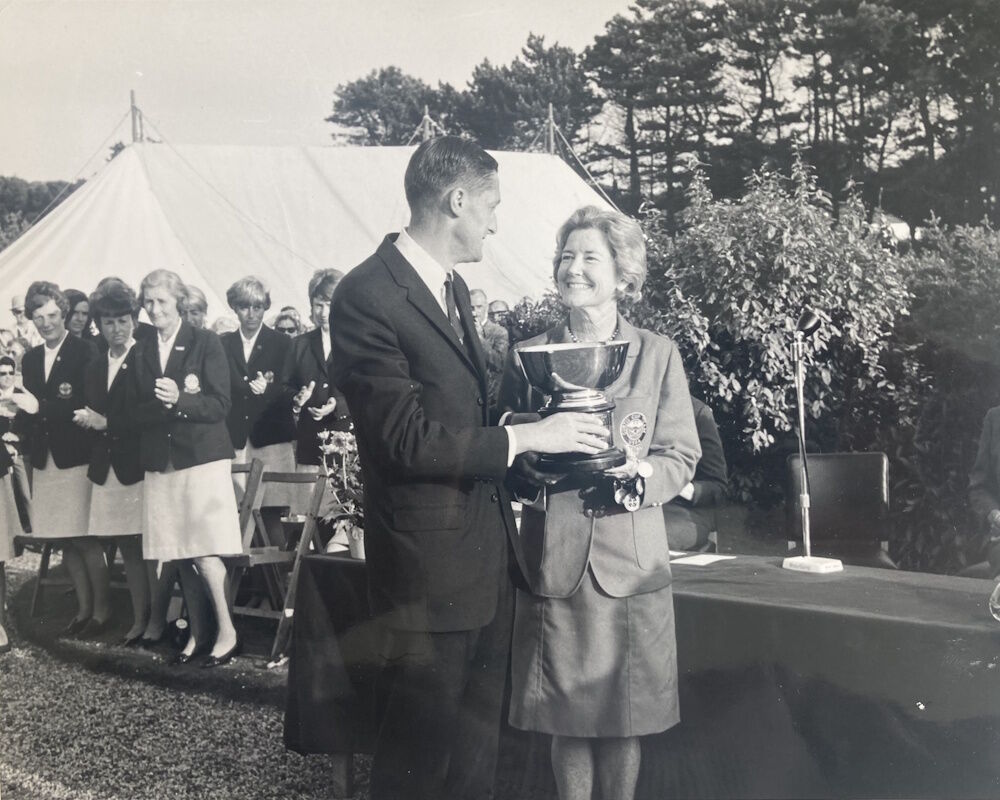
The first Curtis Cup to be played in Ireland was hosted by Royal County Down in glorious weather in June 1968, sixty-one years after the Curtis sisters had played in the British Ladies’ Championship in Newcastle. The U.S. team, captained by Evelyn Monsted of the New Orleans CC, was much stronger on paper with six U.S. Amateur Championship finalists, three of them winners. Although the GB & I team couldn’t match that depth of experience it managed to lead by one point at the end of the first day. However the Americans’ superiority told on the second day winning 6½ of the 9 points available. Lasting friendships were formed and, some months after the match, a gift from the New Orleans CC members arrived in the shape of a magnificent silver trophy in thanks for the hospitality received during the competition. Since then the New Orleans Trophy has been played for in the annual mixed foursomes competition.
Read More
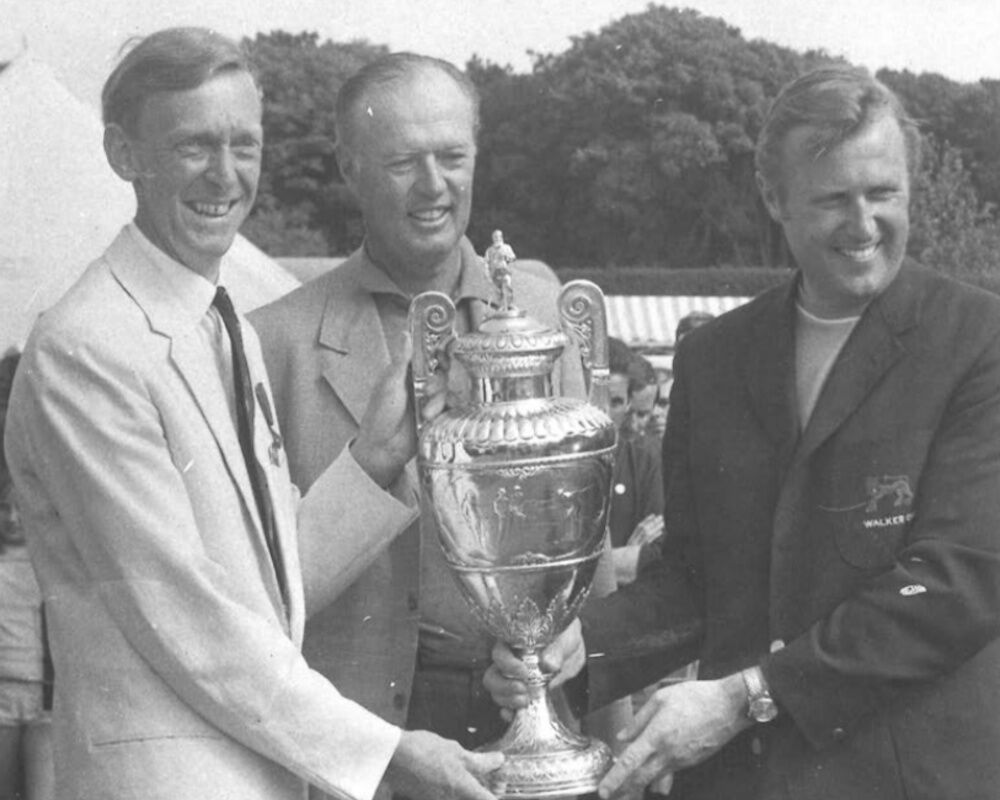
If Irishman Joe Carr was the dominant GB & I golfer of the 1950s there can be no doubt that Michael Bonallack was, by some distance, the leading player of the 1960s. His record is extraordinary and his achievements in golf too extensive to list. His fifth, and last, victory in The Amateur was secured at Royal County Down during a wonderful week of golf with an exceptionally strong international field. His play in the final against the great American career amateur, Bill Hyndman, was supreme and equalled only by his graciousness and sportsmanship throughout the week. In 1998 he was elected an Honorary Member of the club in recognition of his exceptional achievements in golf.
Read More
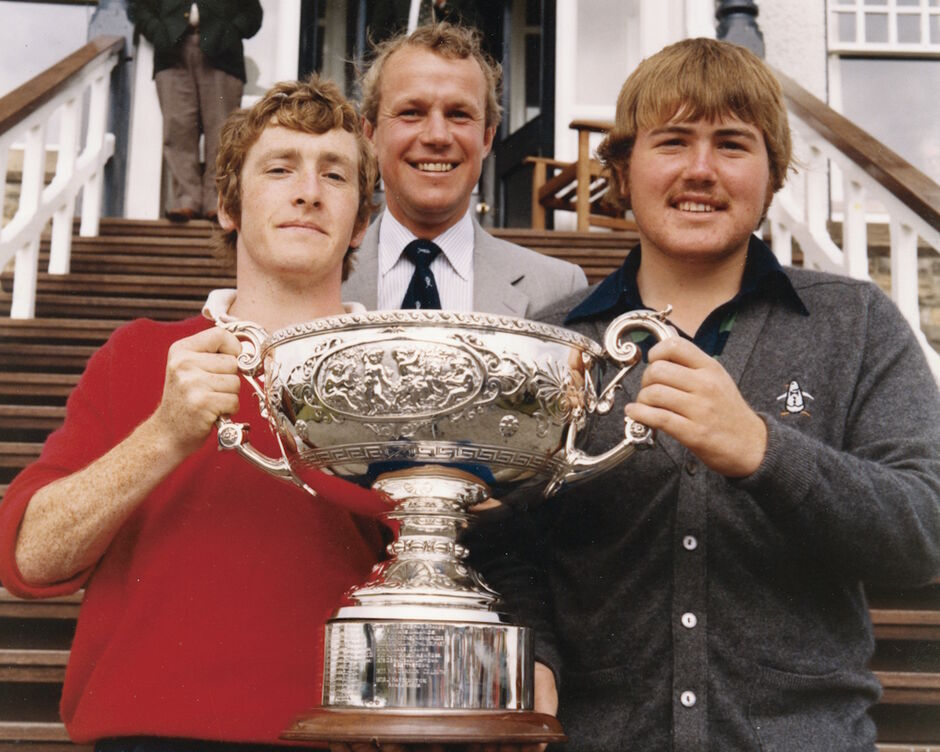
Over time multiple national Irish championships continued to be played in Newcastle. In 1980 a 16-year-old boy, Ronan Rafferty, from the nearby Warrenpoint club, strolled through the field to win that year’s Irish Close Championship. His opponent in the final was Michael Bannon, a 22-year-old from the Belvoir Park club in Belfast. Bannon became a club professional and, although a reserved individual, found fame as Rory McIlroy’s lifelong coach. Rafferty played Walker Cup in 1981 at Cypress Point before a hugely successful professional career with tournament wins across the globe. In 1989 he edged out Jose Maria Olazabal in winning the European Tour Order of Merit and topped the Ryder Cup standings that year.
Read More
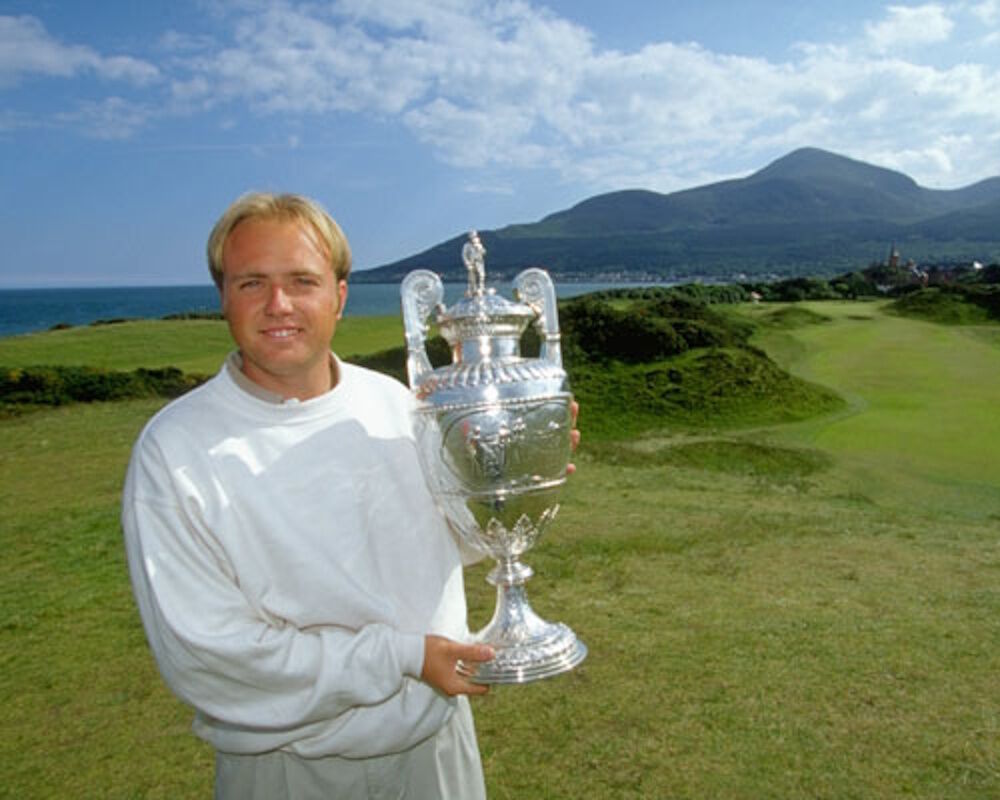
The two favourites for the 1999 Amateur Championship were Aaron Baddeley from Australia and South Africa’s Trevor Immelman. Neither performed as well as anticipated and an all English final resulted in a win for Graeme Storm from Durham who beat Yorkshireman Aran Wainwright in a one-sided final. Wainwright had been English Amateur Champion two years earlier but it would be Storm who secured a place on the victorious 1999 Walker Cup team at Nairn later that summer alongside fellow English internationals Luke Donald and Paul Casey.
Read More
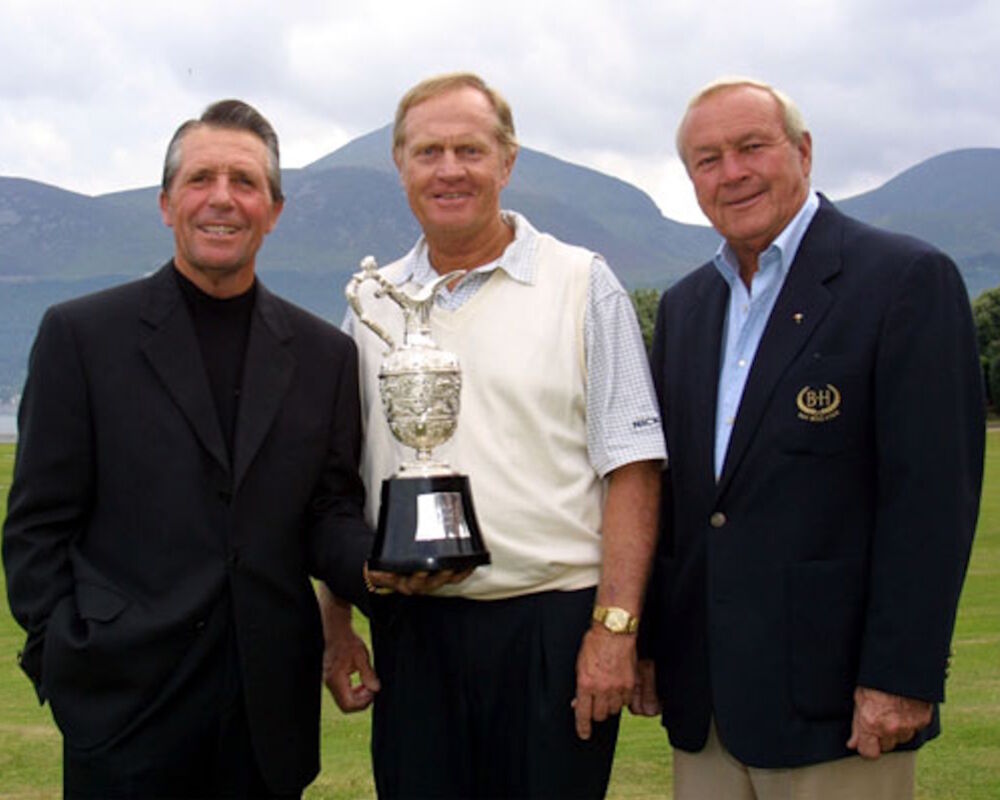
The Senior British Open was first held in 1987 and came to Royal County Down in 2000 when Ireland’s Christy O’Connor Jnr, the home favourite, won. The club was invited to host for two more years and in 2001 five former winners of The Open Championship competed, including the 'Big Three' of Jack Nicklaus, Arnold Palmer and Gary Player. Nicklaus played wonderful golf tee to green but his putter let him down and he finished in 3rd place, 3 strokes behind the Australian, Ian Stanley, who defeated Bob Charles from New Zealand at the first tie-hole.
Read More
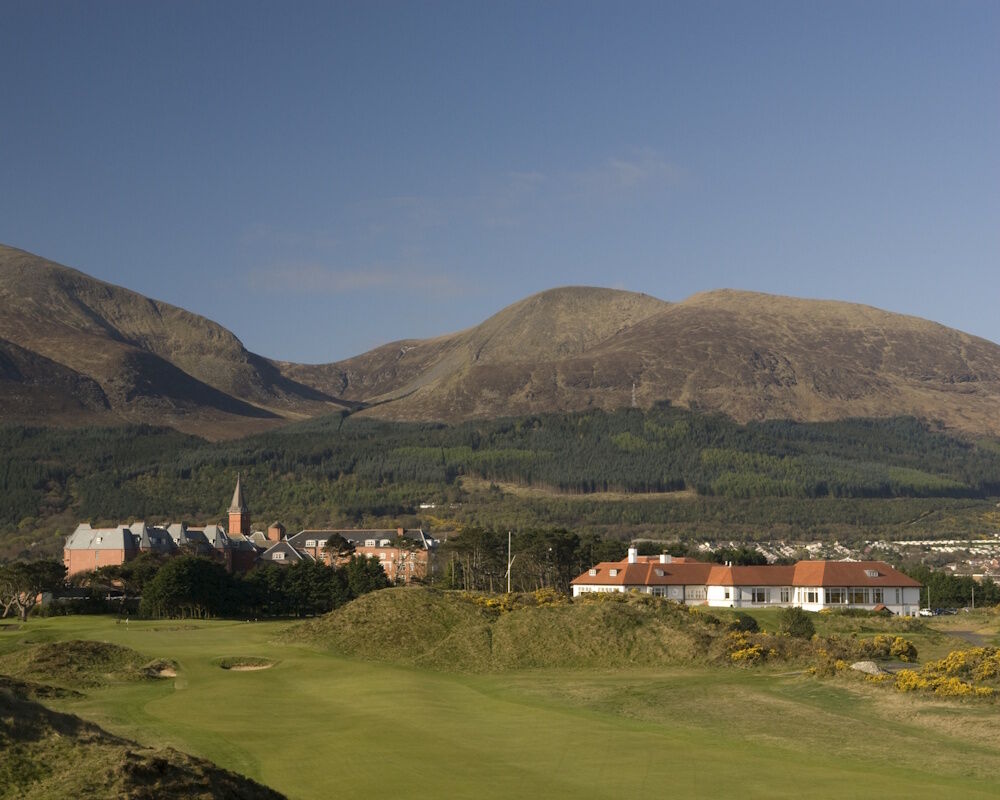
In the latter part of the twentieth century growth in the popularity of golf and Royal County Down as a golfing destination meant that a decision had to be taken to modernise and expand the clubhouse facilities for staff, members and visitors. The Club continues to monitor and improve the warm welcome and experience for all who come our way.
Read More
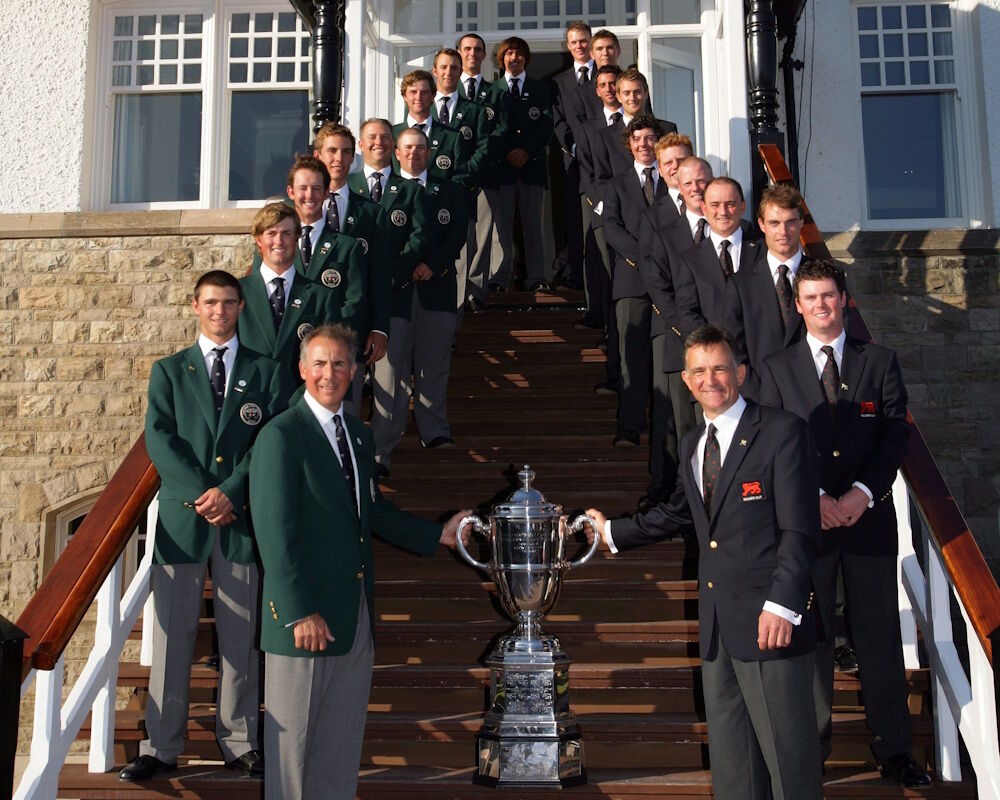
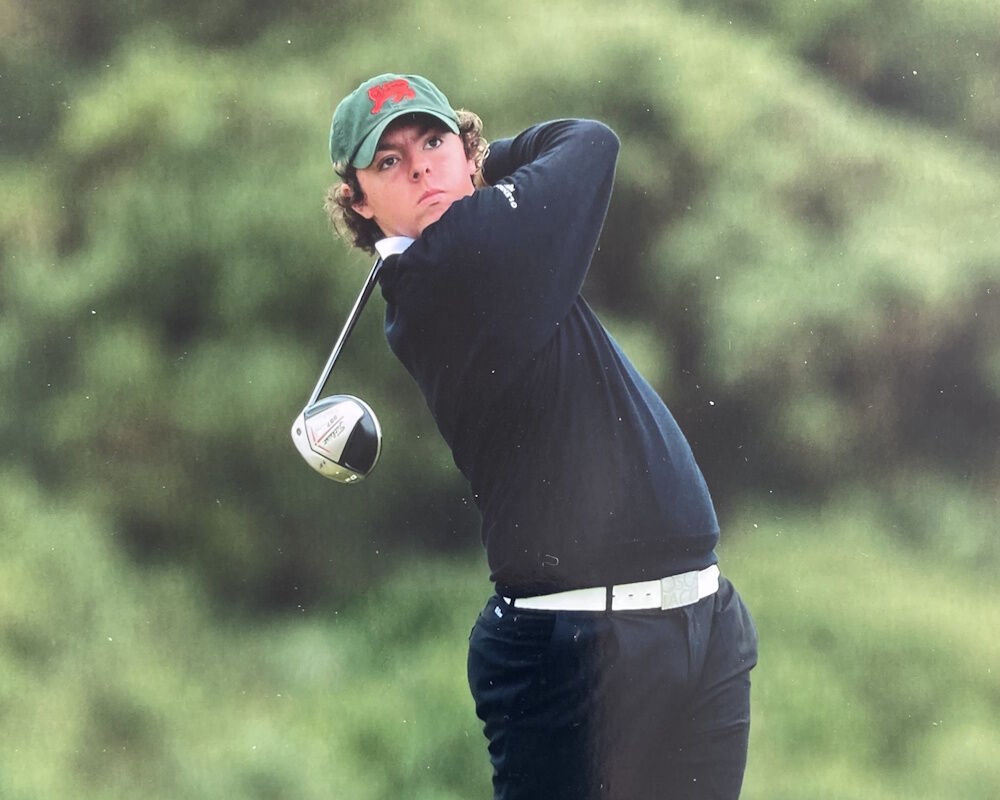
In September 2007 the Walker Cup matches were played at Royal County Down in perfect conditions. Captains George (Buddy) Marucci and Colin Dalgleish led their teams into a match which was played in the true spirit of the game with the U.S.A. winning by the narrowest of margins. The teams, the galleries, the course and the nail-biting climax provided what was described in Gordon Simmonds’ centenary history of the Walker Cup as 'wonderful theatre.' At the time of writing four of the players have won nine 'Majors' between them. It was Rory McIlroy’s last event as an amateur.
Read More
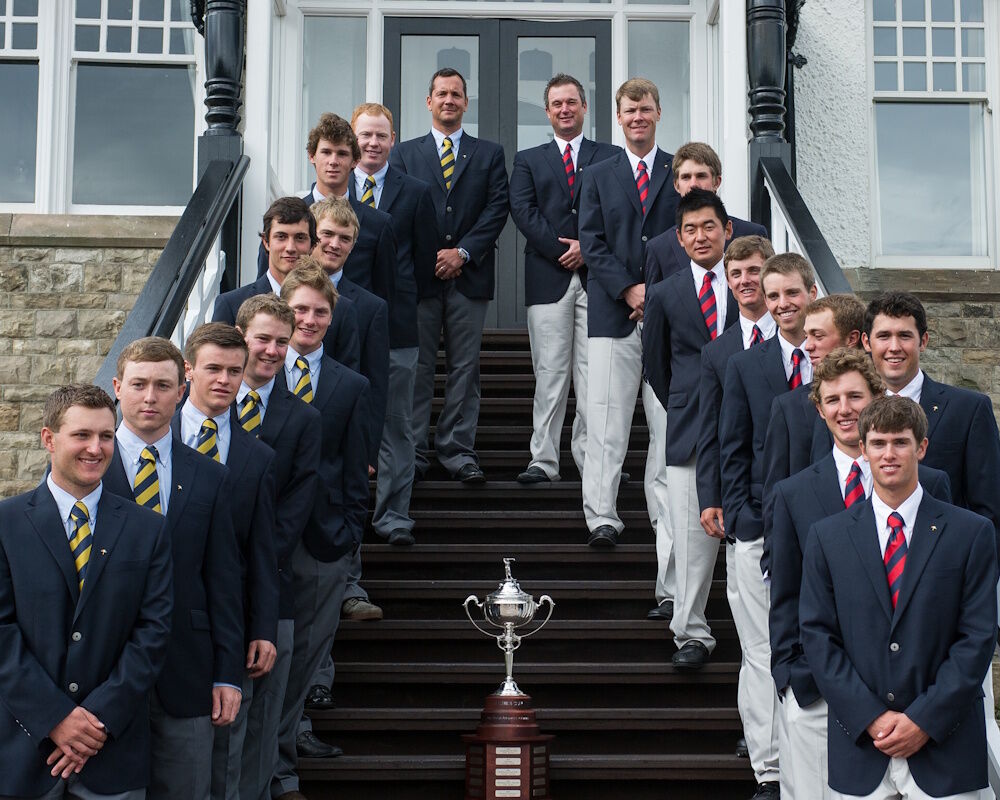
Arnold Palmer presented a Cup bearing his name in 1997, for play between U.S. and GB & I college golfers. The GB & I team composition was altered in 2003 to include European golfers, and in 2018 female golfers came onboard. The 2012 match at Royal County Down witnessed Europe overturning a 6-10 deficit to take 7½ of the available eight points in the last-day singles. Undoubtedly the home team coped better with the very blustery conditions. Several players subsequently turned professional and had varying degrees of success on the PGA and European Tours with Justin Thomas winning two majors to date.
Read More
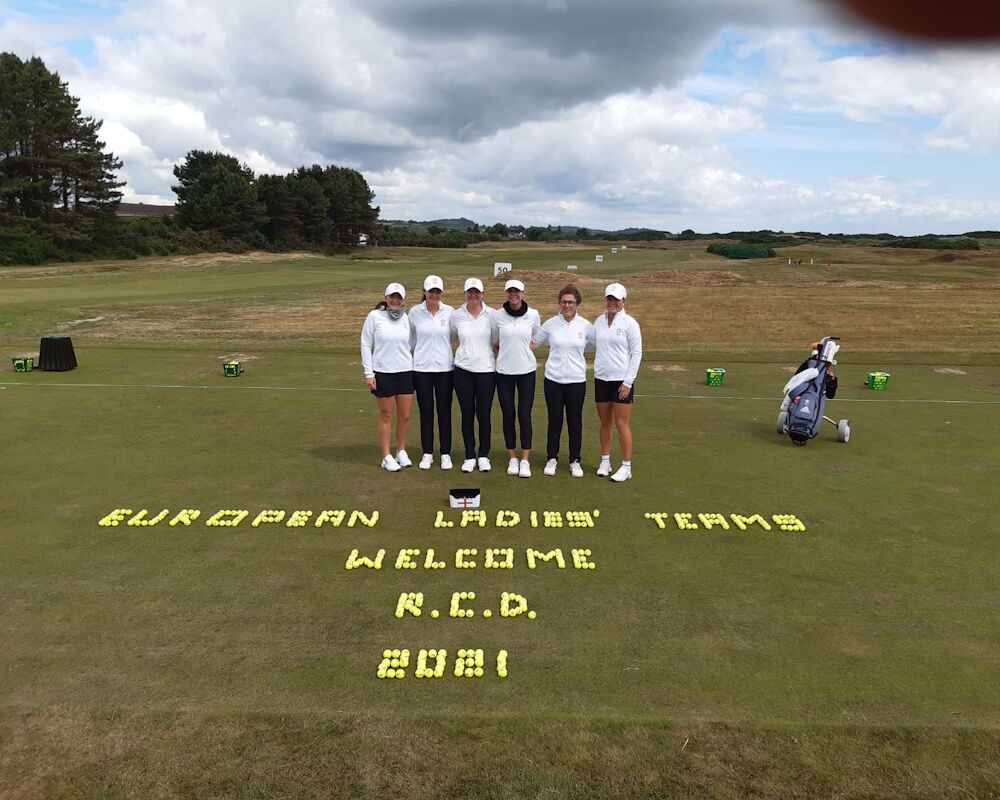
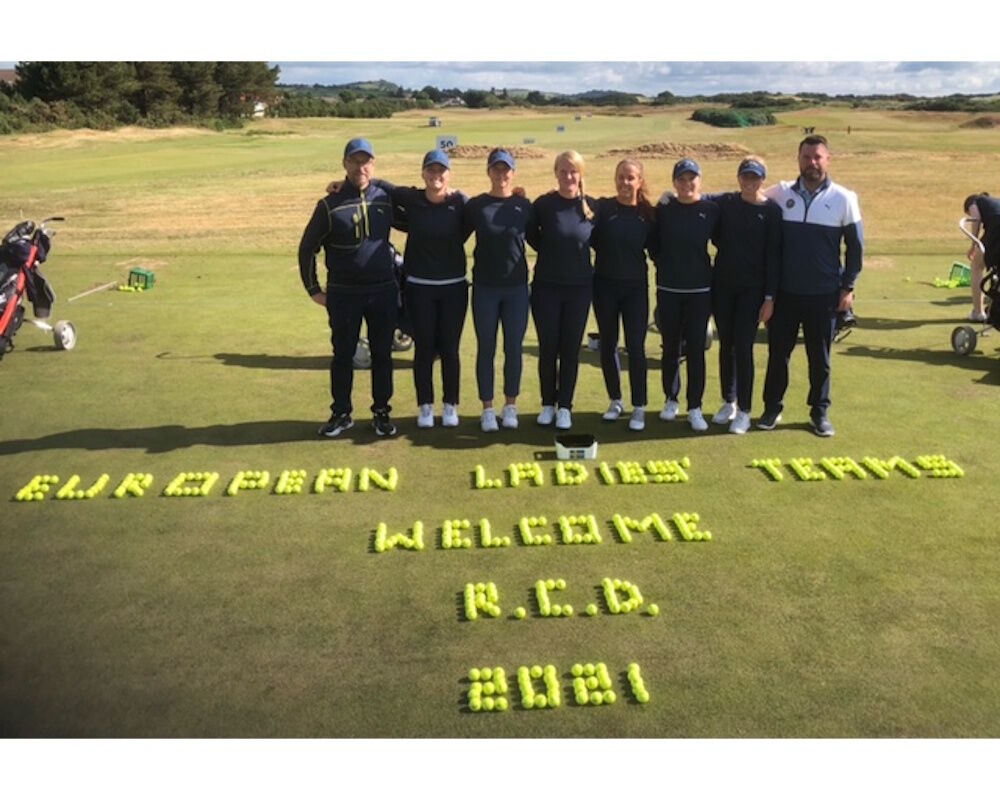
The European Golf Association brought the European Ladies’ Team Championship to Royal County Down in July 2021. Nineteen national teams were accommodated in the adjacent Slieve Donard Hotel and despite some restriction of social activities due to the Covid pandemic the event was a resounding success. Having won in 2019 and 2020, Sweden’s top-ranked players, Ingrid Lindblad, Linn Grant and Maja Stark, were still on the team and were the firm favourites to win. However in the final they lost 5-2 to a spirited England team led by Emily Toy who had won the British Ladies’ Amateur at Newcastle just two years earlier. Maja Stark would go on to win the U.S. Women’s Open in 2025.
Read More
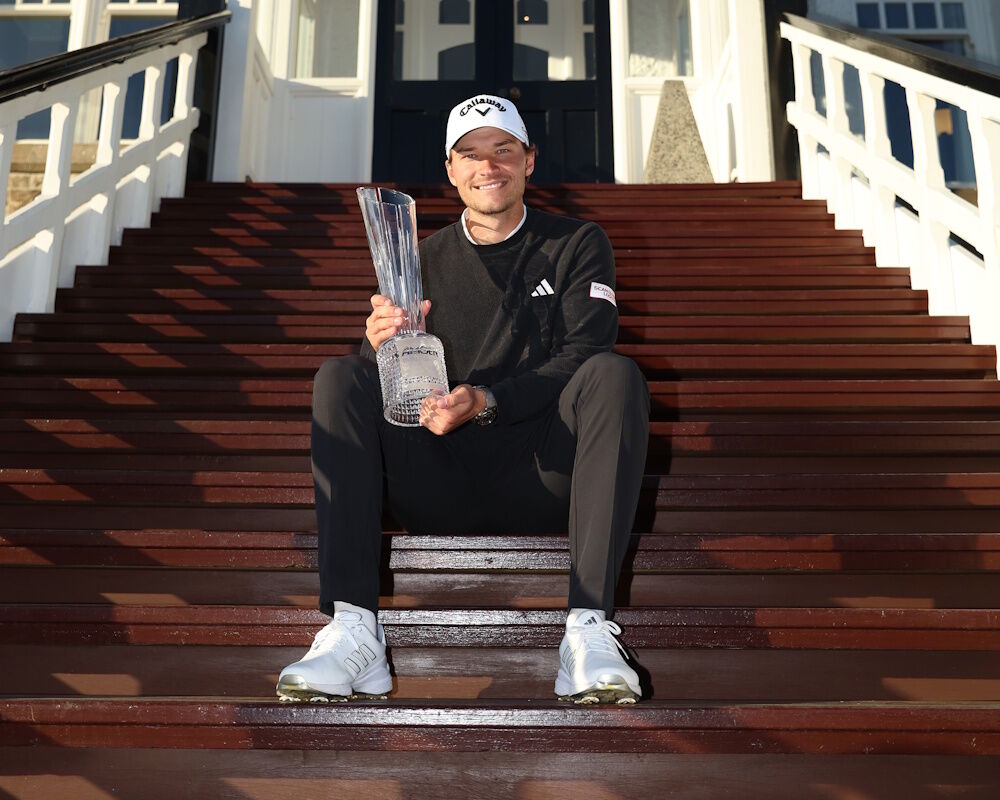
Traditionally Royal County Down has made itself available for elite amateur golf events but has always accommodated professional competition whenever possible. In recent years the European (DP World) Tour has brought the Irish Open back to Newcastle twice and those events have been enthusiastically embraced by the membership of our golfing family of Royal County Down, Royal County Down Ladies’ Golf Club and the Mourne Golf Club as well as our local community in the Newcastle area. Rory McIlroy hosted the Irish Open with great enthusiasm and generosity in 2015 and in 2024 he played his heart out to agonisingly lose by one stroke to the magnificent play of the young Danish player, Rasmus Højgaard. More 'wonderful theatre'!
Read More
Delete this text box

BT33 0AN, Northern Ireland
Created by intelligentgolf version 10.1.2.